
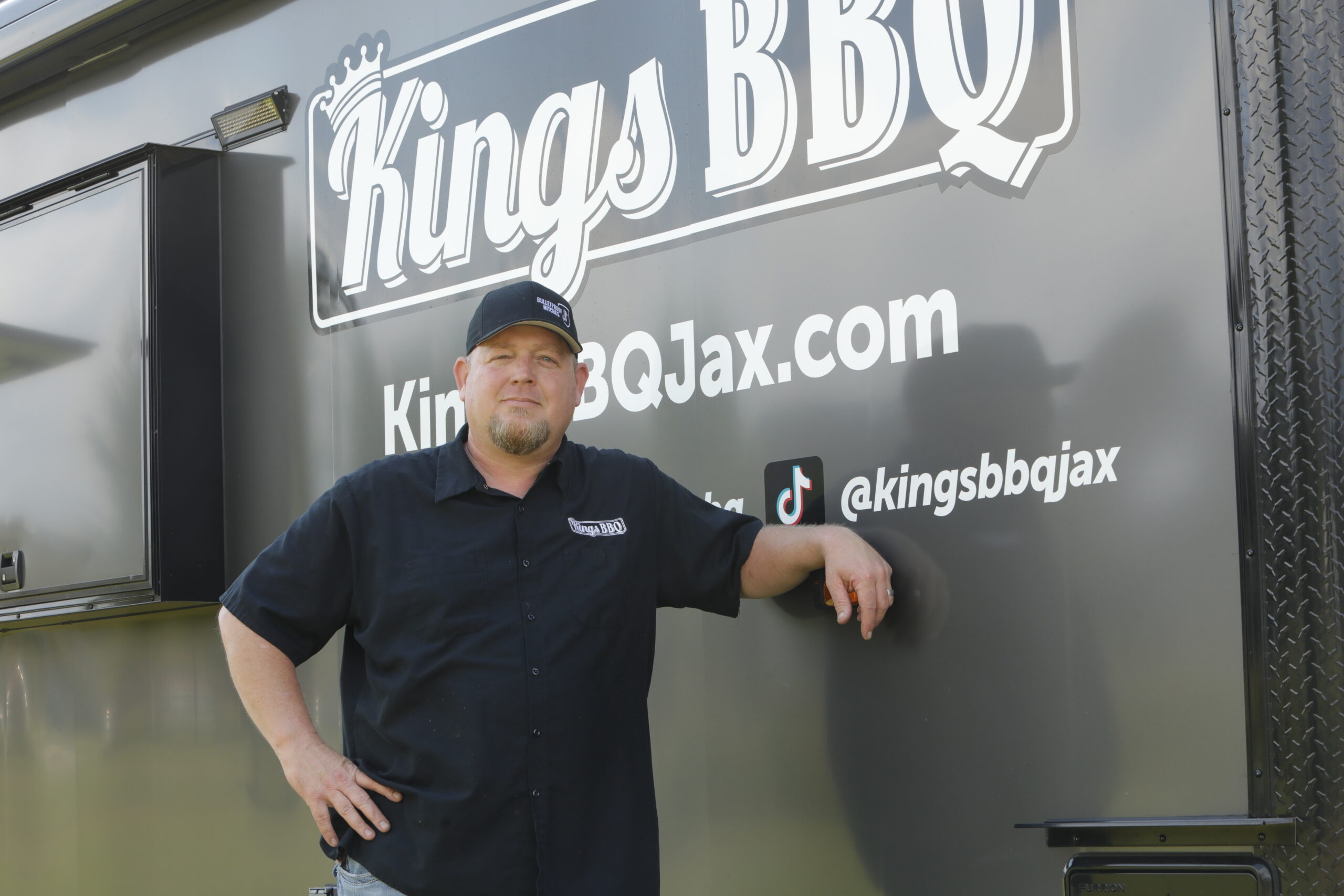
A coffee trailer is a towable, fully enclosed unit built to serve espresso and drip coffee anywhere you can park it. You tow it with a separate truck or SUV, set up at a market or event, and run a full coffee bar without the rent, the build-out, or the long lease that a storefront demands. For anyone who wants to sell coffee without sinking six figures into a physical shop, it is one of the most practical ways to start.
Demand is on your side. According to the National Coffee Association, 66% of American adults drank coffee in the past day, more of them than any beverage other than bottled water, and coffee drinkers average nearly three cups a day (National Coffee Association). That is a daily habit, not a trend, and a coffee trailer lets you meet it where the people already are.
This guide covers what a coffee trailer is, what it costs, the equipment it needs, how it stacks up against a cart or a cafe, and the permits and financing that get you rolling.
If you are past the research stage, SDG builds custom coffee trailers to order and ships them nationwide.
Key Takeaways
- A coffee trailer is a towable coffee bar, more spacious than a cart and cheaper to buy than a self-powered coffee truck.
- Coffee demand is strong and growing: 66% of US adults drink coffee daily, and specialty coffee hit a record 48% of adults in the past day, up from 37% in 2021 (National Coffee Association).
- Startup costs run well below a storefront. Coffee carts launch for roughly $24,000 to $49,000 and cafes for $125,000 to $400,000, with a fitted trailer landing in between (Cart-King, 2025).
- Core equipment includes a commercial espresso machine, grinders, a water system with fresh and gray tanks, refrigeration, and reliable power.
- Financing spreads the cost, and a custom builder like SDG Trailers can spec the trailer to your menu, your power needs, and your brand.
What is a coffee trailer?
A coffee trailer is a non-motorized, enclosed trailer outfitted as a mobile coffee shop, towed to its location by a separate vehicle. Inside sits everything a good coffee bar needs: an espresso machine, grinders, a water and drainage system, refrigeration for milk, a service window, and a point-of-sale setup. Because the trailer has no engine of its own, more of your budget goes into the coffee equipment and the build quality rather than a chassis and a motor.
That single difference, no engine, is what separates a trailer from a coffee truck. A truck is a self-propelled vehicle, so you pay for the drivetrain and you take the whole rig off the road when it needs mechanical work. A trailer detaches. If your tow vehicle needs service, the trailer keeps earning while you hook up a different truck. You also get more usable interior space, since a trailer is not giving up room to a cab and engine bay.
How much does a coffee trailer cost?
A coffee trailer typically costs less than a coffee truck and far less than a brick-and-mortar cafe. Industry cost figures compiled by cart manufacturer Cart-King put a coffee cart at roughly $24,000 to $49,000 to launch, a coffee food truck at $71,000 to $198,000, and a traditional cafe at $125,000 to $400,000 (Cart-King, 2025). A fitted coffee trailer sits between a cart and a truck, because you get real interior space and commercial equipment without paying for a motor.
At SDG Trailers, our food and concession trailers run from the mid-$60,000s for a compact single-axle build up past $100,000 for a large, fully loaded unit. A 19-foot vending trailer is listed around $68,795, while a 28-foot build with premium equipment installed runs closer to $108,000. Where a coffee trailer lands in that range depends on length, the espresso machine you choose, your power system, and how much refrigeration and storage you need.
The payoff is a faster path to break-even. Cart-King reports that mobile coffee operators often reach break-even within three to six months, compared with 12 to 24 months for a traditional cafe. Lower fixed costs and no long lease are a big part of why.
Is a mobile coffee business worth it?
The numbers behind coffee demand make a strong case for a mobile coffee business. Coffee is a daily purchase for two-thirds of American adults, and the premium end is where the growth is. The National Coffee Association reports that specialty coffee reached a record 48% of American adults in the past day, up from 37% in 2021, a jump of nearly a third in four years. Customers are paying more for better coffee, and a well-run trailer can serve exactly that.
The wider mobile food sector backs this up. IBISWorld pegs the US food truck market at about $2.9 billion in 2026, after growing at a 3.4% average annual rate since 2021 (IBISWorld). Coffee vendors are a growing slice of that market, and they carry an advantage most food concepts do not: high margins on a low-cost product and repeat customers who come back every morning.
A trailer also lets you test locations without a lease. Work a farmers market on Saturday, an office park on weekday mornings, and a festival when one comes to town. You follow the demand instead of hoping it walks past a fixed address.
Coffee trailer vs. coffee cart vs. coffee shop
The right format comes down to how much space, capacity, and capital you want to commit. A cart is the cheapest and most portable, a shop is the most expensive and least flexible, and a trailer sits in the middle with a strong balance of both.
| Factor | Coffee cart | Coffee trailer | Coffee shop |
|---|---|---|---|
| Typical startup cost | $24,000 to $49,000 | Mid-$60,000s and up | $125,000 to $400,000 |
| Mobility | High, easy to move | High, tow anywhere | None, fixed location |
| Interior space | Minimal | Roomy, walk-in service | Largest |
| Menu and volume | Limited | Full espresso menu | Full menu plus seating |
| Lease required | No | No | Yes, multi-year |
Cost ranges for carts and shops reflect Cart-King’s 2025 figures; the trailer range reflects SDG Trailers build pricing. A cart wins on price and portability but limits your menu and daily volume. A shop offers the most room and seating but ties you to rent and a long build-out. A trailer gives you a real coffee bar you can relocate, which is why many operators start there.
What equipment does a coffee trailer need?
A working coffee trailer needs a coordinated set of equipment, not just an espresso machine. Skimp on the water system or the power supply and the whole setup stalls at the worst moment. Plan these core components:
- Espresso machine and grinders. A commercial two-group or three-group machine plus at least one dedicated espresso grinder, and a second grinder for decaf or filter coffee.
- Water system. Fresh-water and gray-water tanks, a water heater, and a filtration setup, sized so you can run a full shift without refilling.
- Sinks. A three-compartment sink for washing plus a separate handwash sink, which most health departments require for any food or beverage unit.
- Refrigeration. An undercounter fridge for milk and cold ingredients, and a bit of freezer space if you sell blended or iced drinks.
- Power. A generator, a shore-power hookup, or a battery-and-inverter system rated for the espresso machine, which is often the single biggest power draw.
- Service and point of sale. A service window, counter space, a card reader, and clear menu signage.
A custom builder can size all of this to your menu before the trailer is welded. For a deeper look at fitting out a mobile kitchen, see SDG’s guide to choosing the right equipment for your food trailer and our full lineup of food and concession trailers.
What size coffee trailer do you need?
Trailer size should match your peak volume and your menu, not just your budget. A compact 8.5 by 16 foot trailer is plenty for an espresso-focused cart-style operation with one or two staff. Step up to 8.5 by 20 feet or more when you plan on high morning rushes, a wider menu, or room for two baristas to work without bumping elbows. Longer builds add storage, larger tanks, and space for extra refrigeration.
Think through your busiest hour first. How many drinks will you make between 7 and 9 a.m., and how many people need to move inside the trailer to hit that pace? Size the unit around that answer. SDG’s guide on what size food trailer you need walks through lengths, layouts, and equipment fit in detail, and the same logic applies to a coffee build.
Permits, health codes, and licensing
A coffee trailer is regulated as a mobile food unit, so you will need health department approval before you serve a single cup. Exact rules vary by state, county, and city, but most operators need a mobile food permit, a business license, and a health inspection of the trailer. Many jurisdictions also require a commissary, a licensed commercial kitchen where you prep, clean, and store water and waste between shifts.
Plan for a few common requirements. Inspectors usually check that you have a handwash sink separate from your warewashing sink, adequate fresh and gray water capacity, and a safe setup for any propane used to heat water. If you tow to more than one city or county, you may need a separate permit in each. Build the trailer to the strictest code you expect to work under, and getting approved in the others becomes much easier.
How do you finance a coffee trailer?
Financing lets you launch a coffee trailer without paying the full build cost up front. Because a fitted trailer is a smaller number than a cafe build-out, monthly payments are easier to cover from daily coffee sales, which carry high margins. Many operators put money down, finance the balance over a set term, and let the trailer’s revenue carry the payment.
SDG Trailers helps buyers arrange financing so a custom build is within reach. You can learn more on our financing page, and when you are ready to spec a unit, our team can price out a build and payment options through a free quote. Running the numbers before you buy keeps the payment comfortable and the business profitable from month one.
Why choose a custom-built coffee trailer
A custom coffee trailer is built around your menu and your brand instead of forcing you to adapt to a generic box. SDG Trailers has been an in-house, factory-direct custom trailer manufacturer since 2001, building food, concession, vending, and refrigerated units from our shop in Waycross, Georgia and shipping them across the United States. Every trailer is fabricated to the customer’s size, layout, equipment, and color, which for a coffee business means the espresso machine, water system, and power are matched to how you actually plan to serve.
Buying factory-direct also means you talk to the people who build the trailer, not a middleman. If your plan calls for a drive-through window, extra refrigeration for a cold-brew program, or a wrap that matches your logo, that gets designed in from the start. Explore fully custom trailers to see how a build comes together.
Frequently Asked Questions
How much does a coffee trailer cost?
A fitted coffee trailer generally costs less than a self-powered coffee truck and far less than a storefront cafe. For reference, Cart-King puts coffee carts at $24,000 to $49,000 and cafes at $125,000 to $400,000, while SDG Trailers food and concession builds start in the mid-$60,000s and rise with size and equipment.
Is a coffee trailer better than a coffee truck?
For most new operators, yes. A trailer has no engine, so more of your budget goes to coffee equipment, and it detaches from your tow vehicle, so service on the truck does not shut down your business. A truck is worth the premium mainly if you value driving the whole rig as one piece.
How profitable is a mobile coffee business?
Coffee carries high margins on a low-cost product, and demand is steady. With 66% of US adults drinking coffee daily and specialty coffee at record highs, a well-located trailer can build repeat morning customers. Cart-King reports many mobile coffee operators reach break-even within three to six months.
Do I need a permit to run a coffee trailer?
Yes. A coffee trailer is treated as a mobile food unit and needs health department approval, typically a mobile food permit, a business license, and an inspection. Many areas also require a commissary. Rules vary by location, so check with your local health department early.
What size coffee trailer should I buy?
Match the size to your busiest hour and your menu. An 8.5 by 16 foot trailer suits an espresso-focused setup, while 8.5 by 20 feet or larger gives two baristas room and supports a wider menu and higher volume.
Can I finance a coffee trailer?
Yes. Financing spreads the cost over a term so daily sales can cover the payment. SDG Trailers helps buyers arrange financing and can quote both the build and payment options before you commit.
About SDG Trailers
SDG Trailers is an all in-house, factory-direct custom trailer manufacturer that has built food, concession, vending, and refrigerated trailers since 2001. We are based at 2255 Industrial Blvd, Waycross, GA 31503, and we serve customers across the United States, with the capacity to ship internationally. To talk through a custom coffee trailer build, call (800) 380-9743 or request a free quote.