
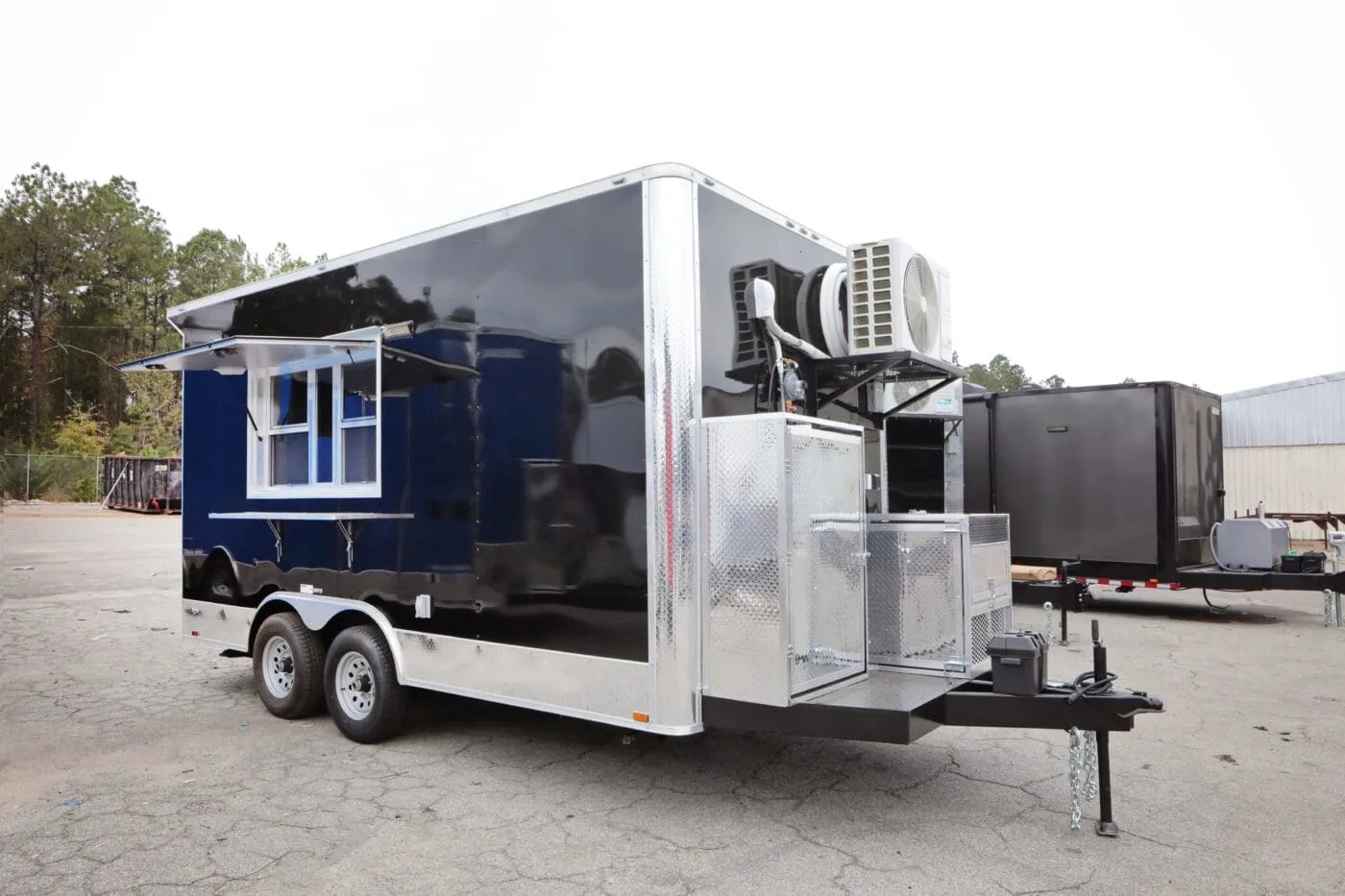
Food & Concession Trailers.
Serving windows under a gullwing awning, a commercial kitchen behind them, and a chassis rated for the equipment you actually put in it.
46 real builds · built to order
Food Trailers For Sale.
Every trailer below left our Waycross, Georgia shop. Open any one for its full equipment list and the price it was built at, then quote yours from it.
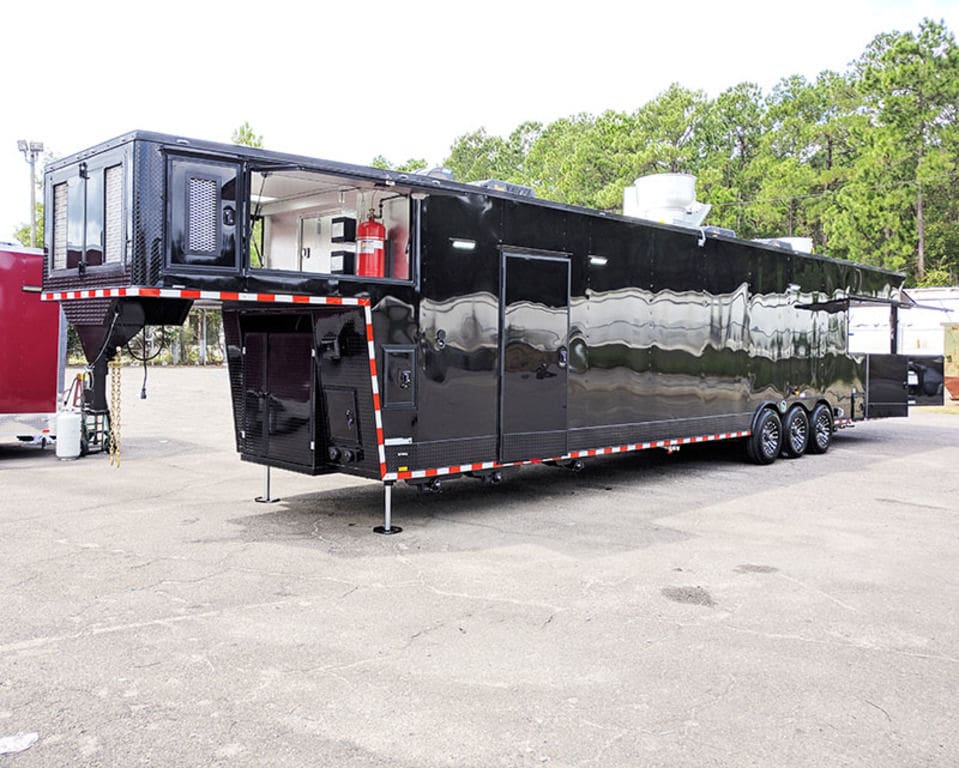
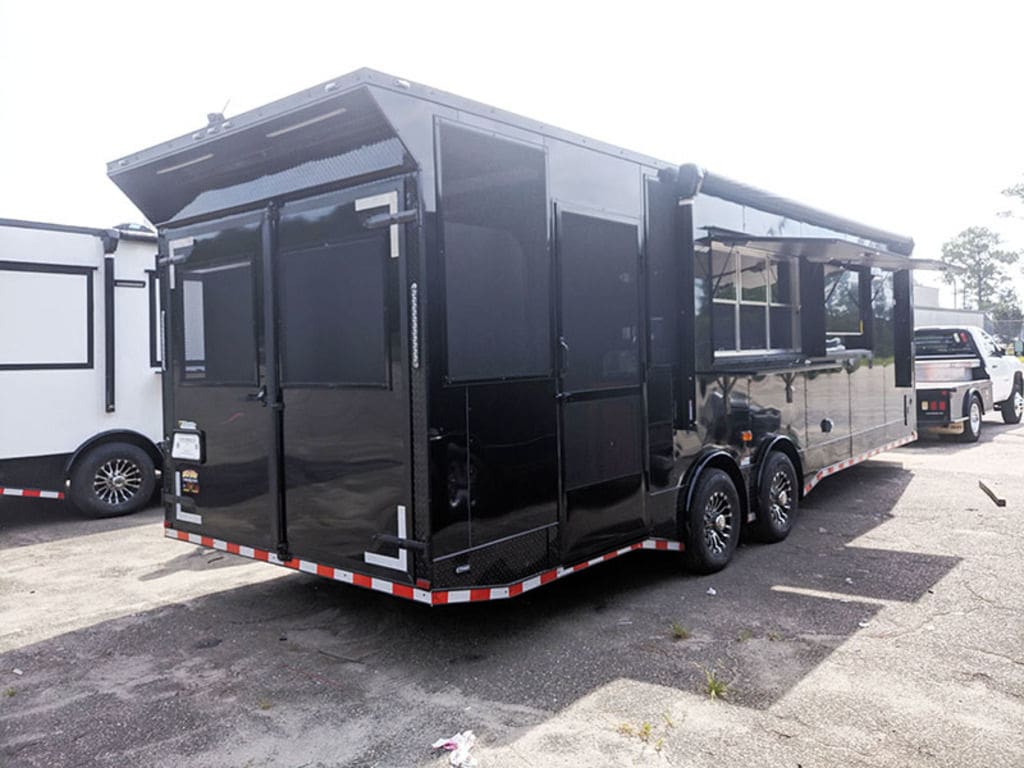
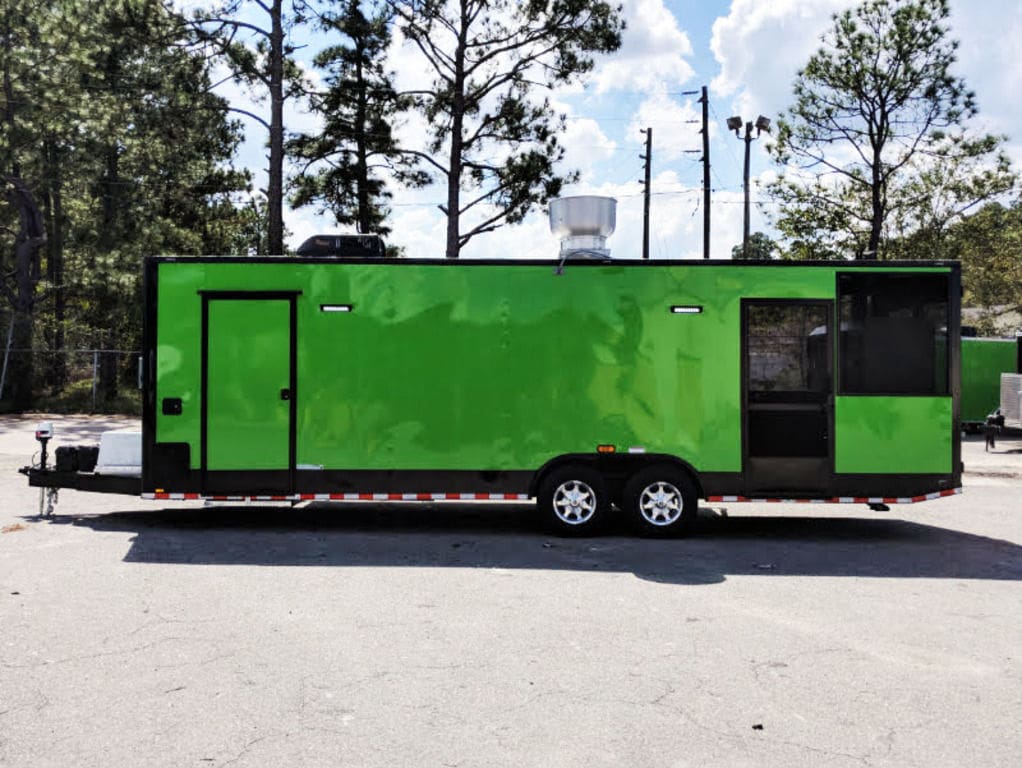
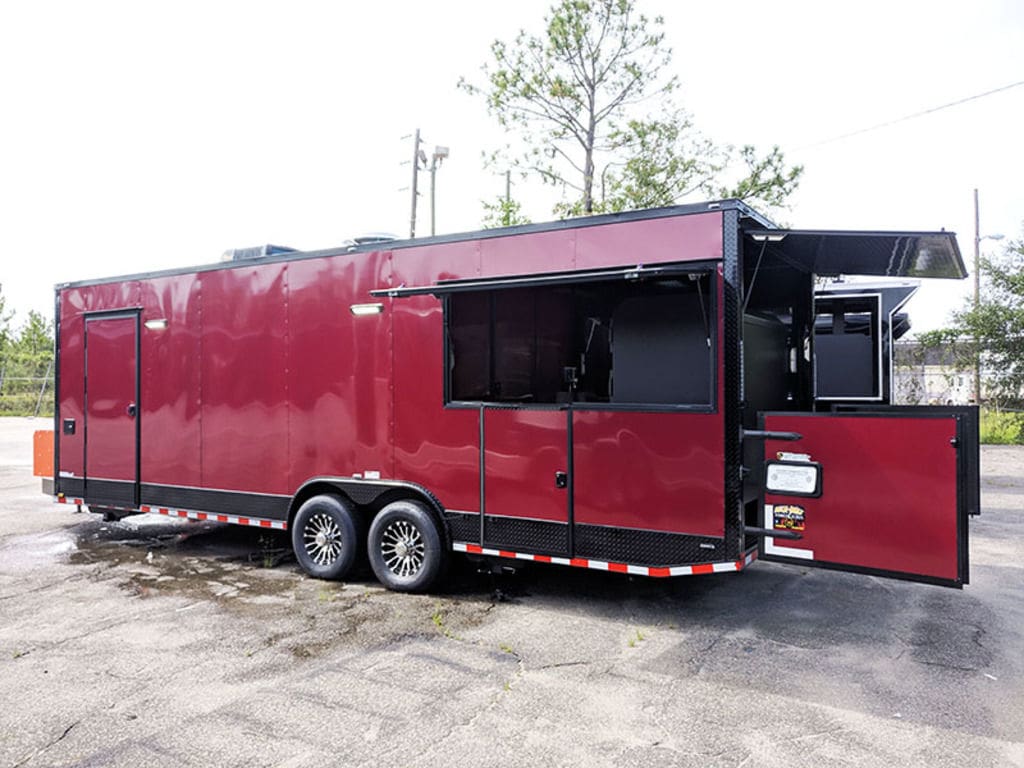
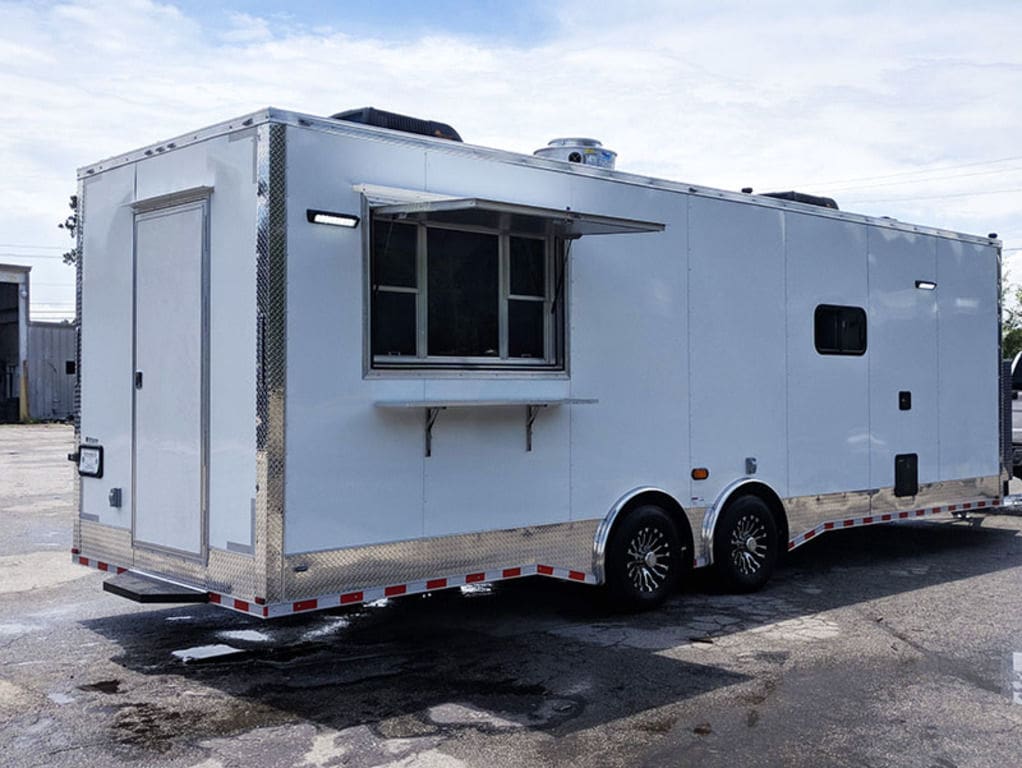
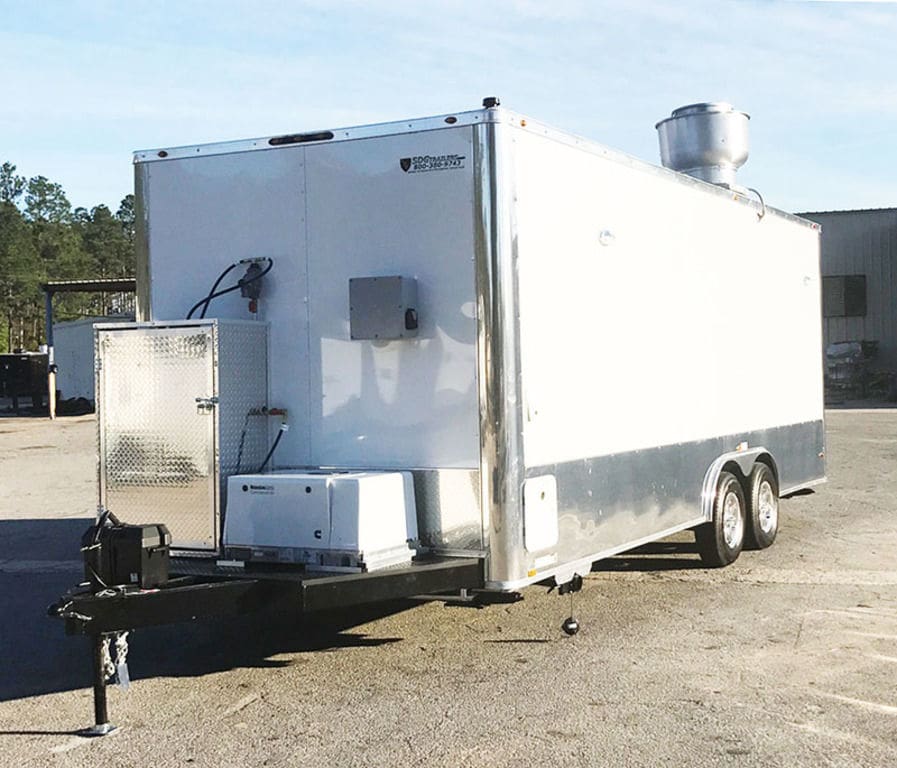
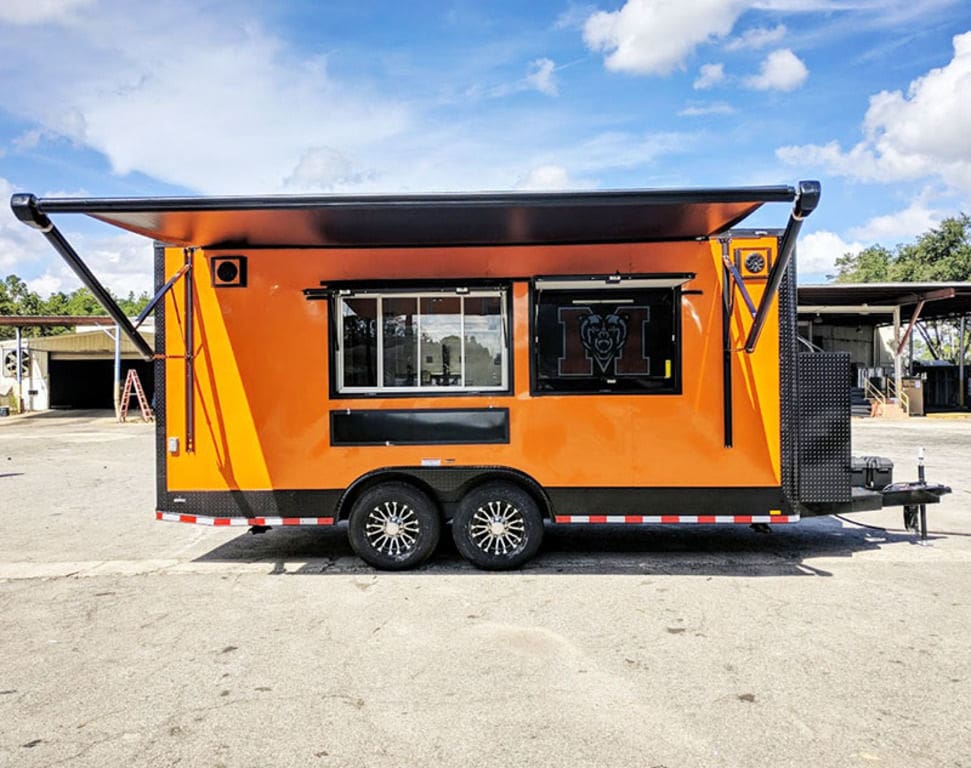
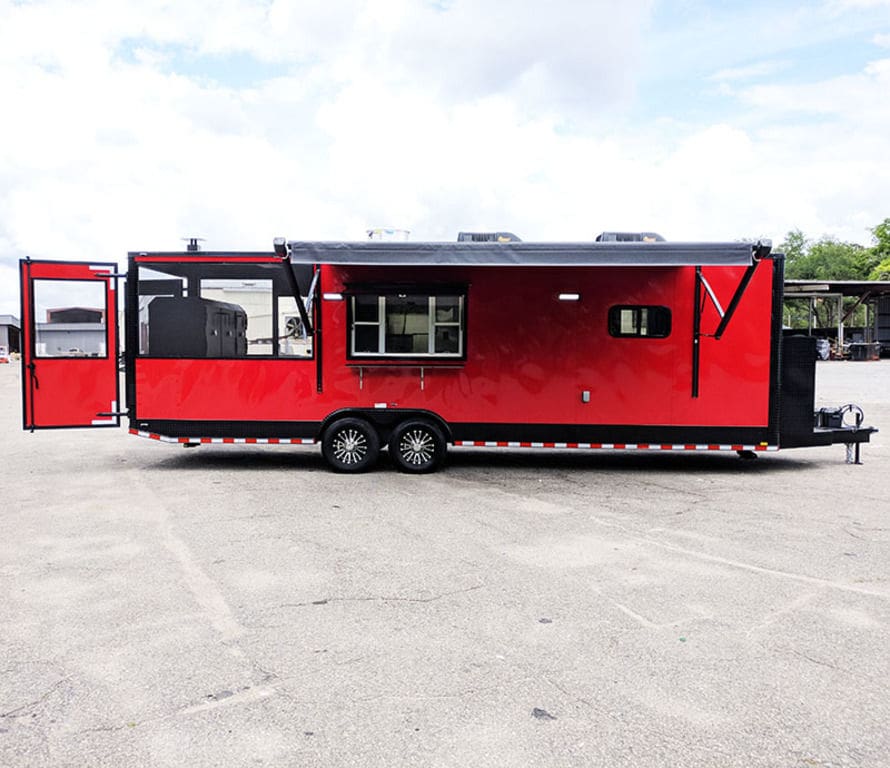
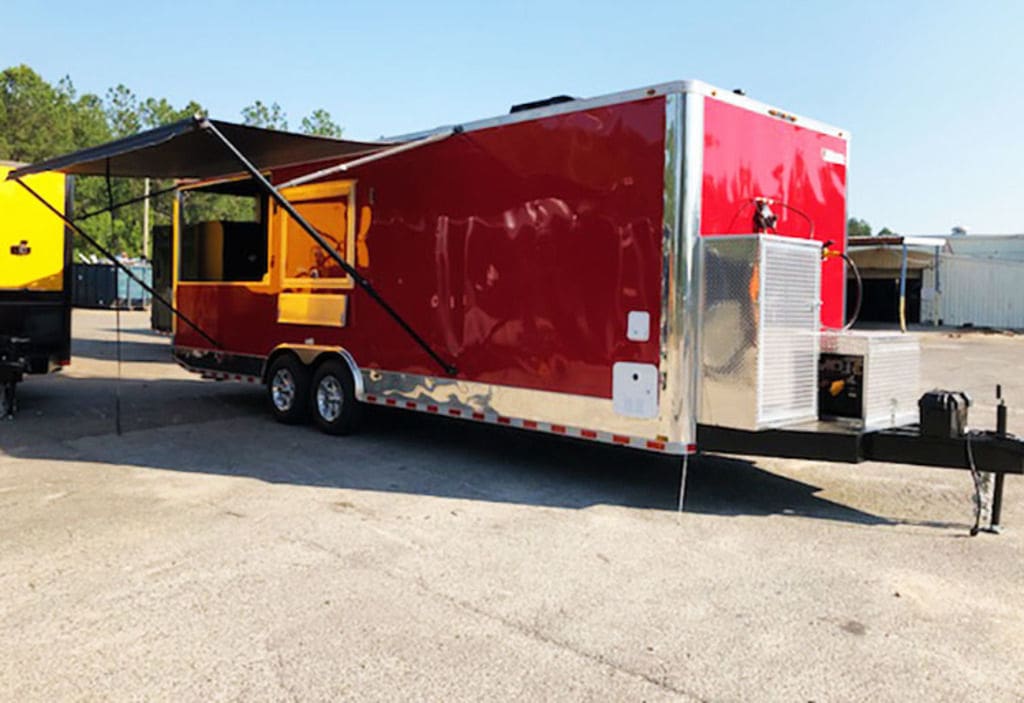
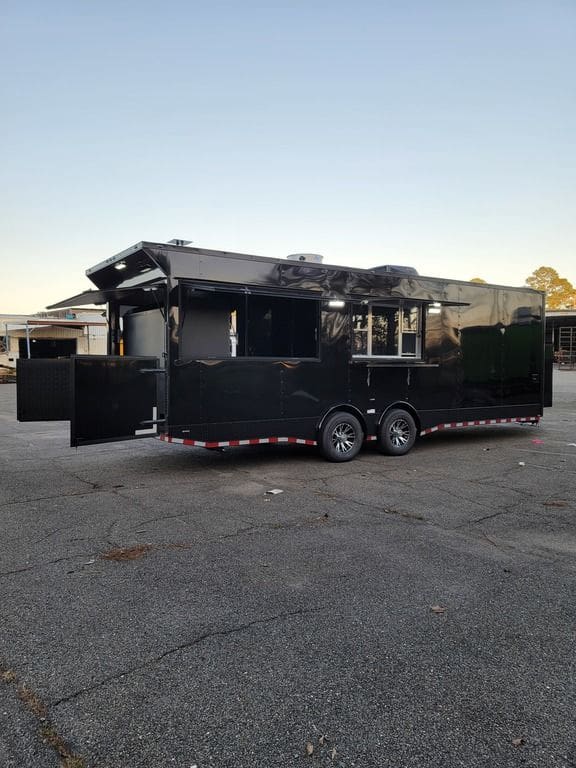
47′ Gooseneck BBQ Trailer with Bathroom & Ole Hickory Smoker (SDG-604)
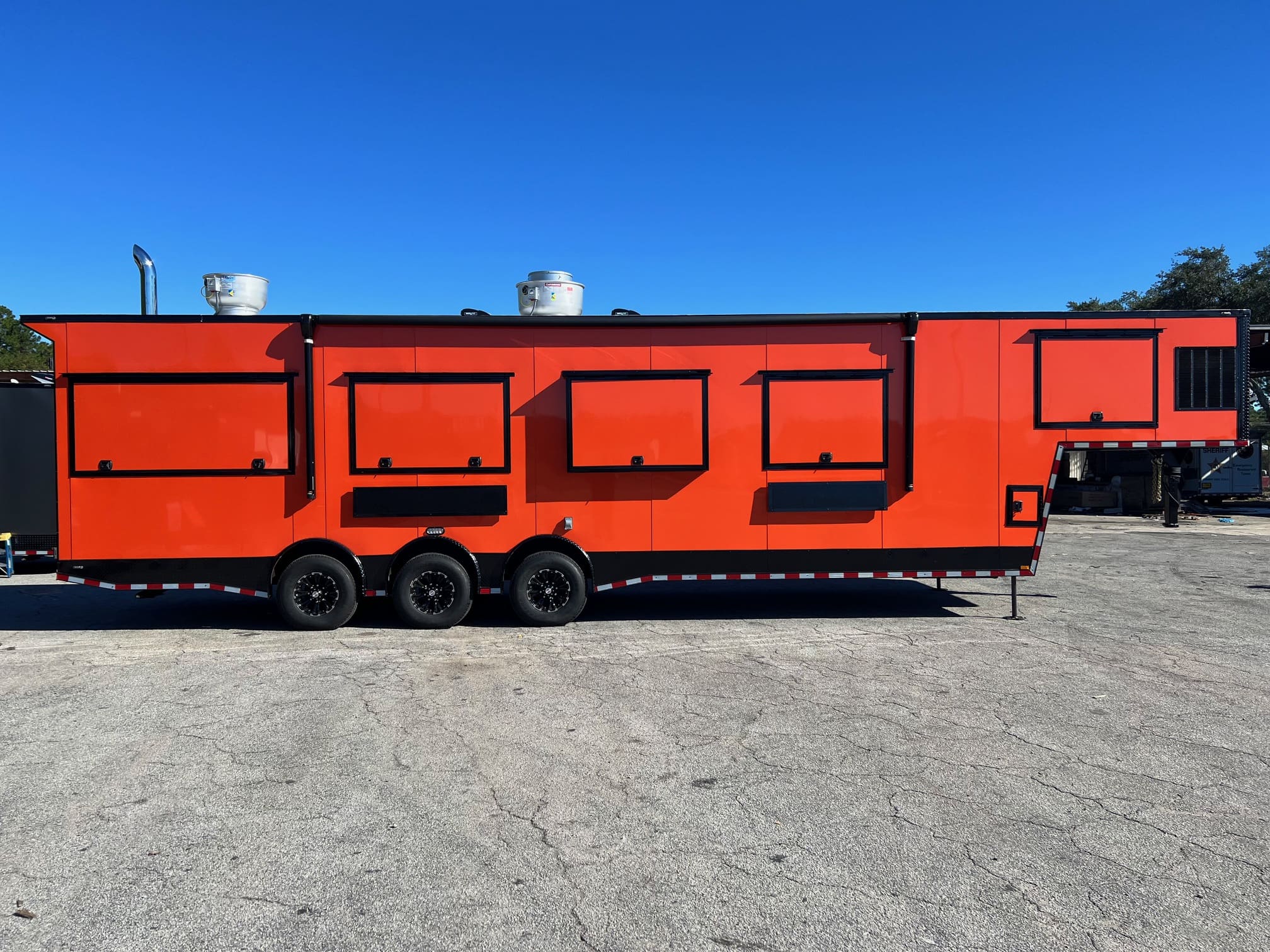
40′ Gooseneck BBQ Trailer with Ole Hickory Smoker & Porch
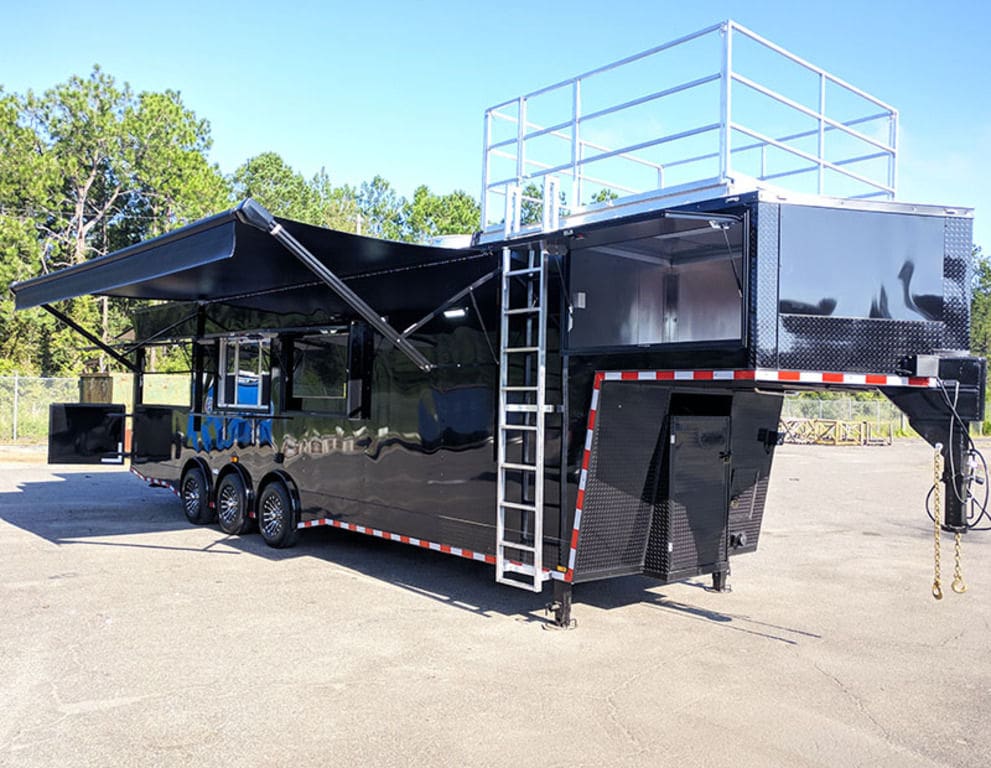
36′ Gooseneck BBQ Trailer with Ole Hickory Smoker & Porch (SDG-601)
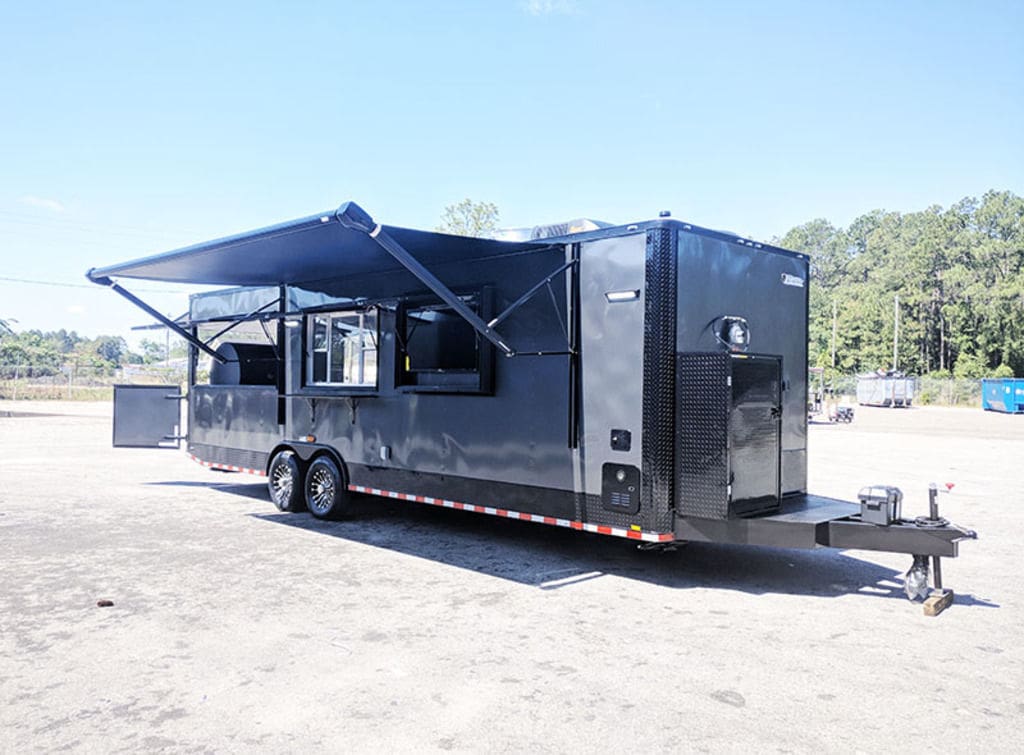
30′ BBQ Trailer with Bathroom & Ole Hickory Smoker (SDG-211)
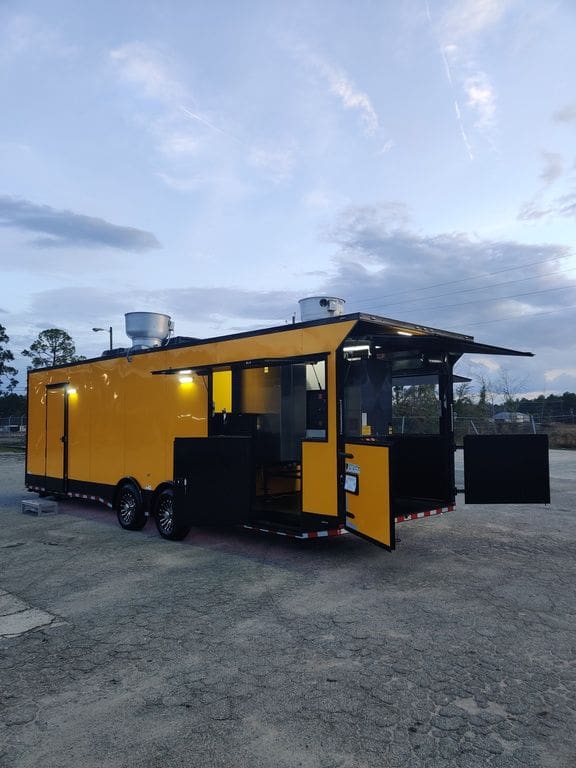
29′ Food Trailer with Bathroom & Ole Hickory Smoker (SDG-901)
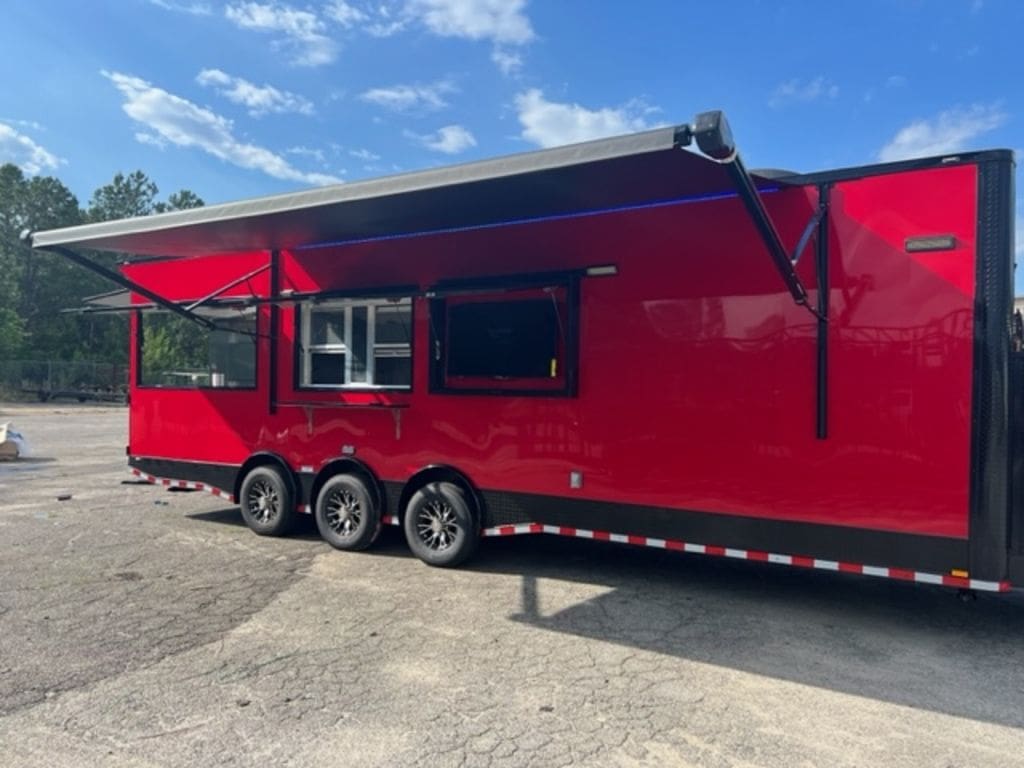
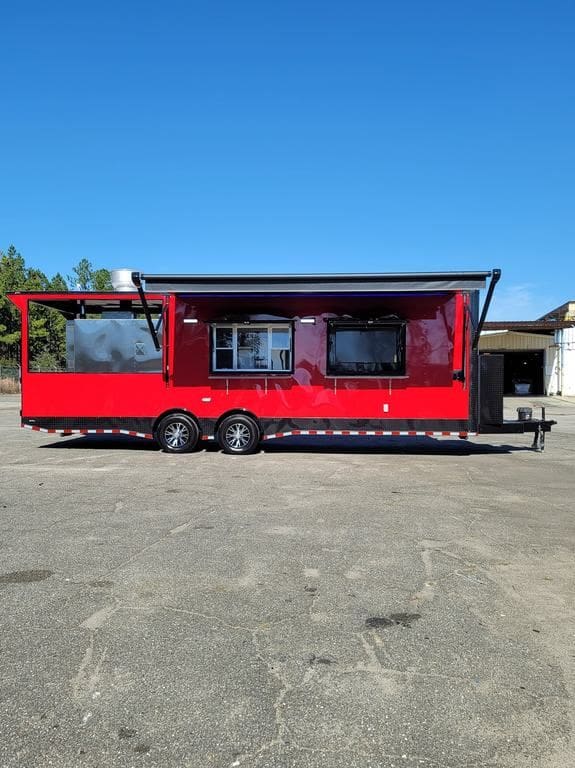
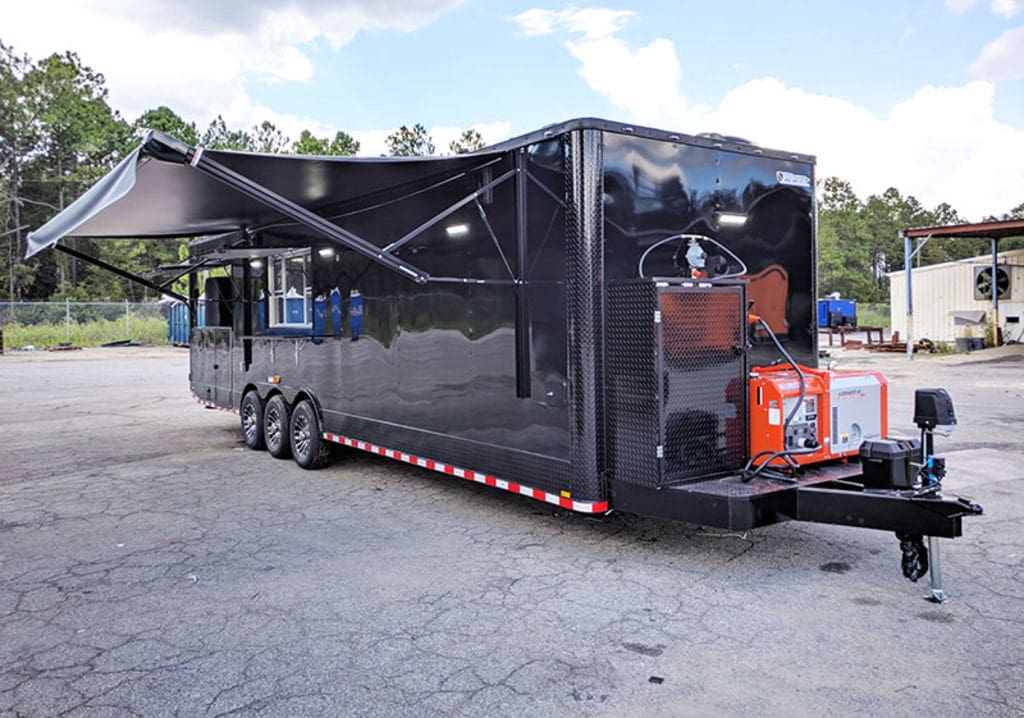
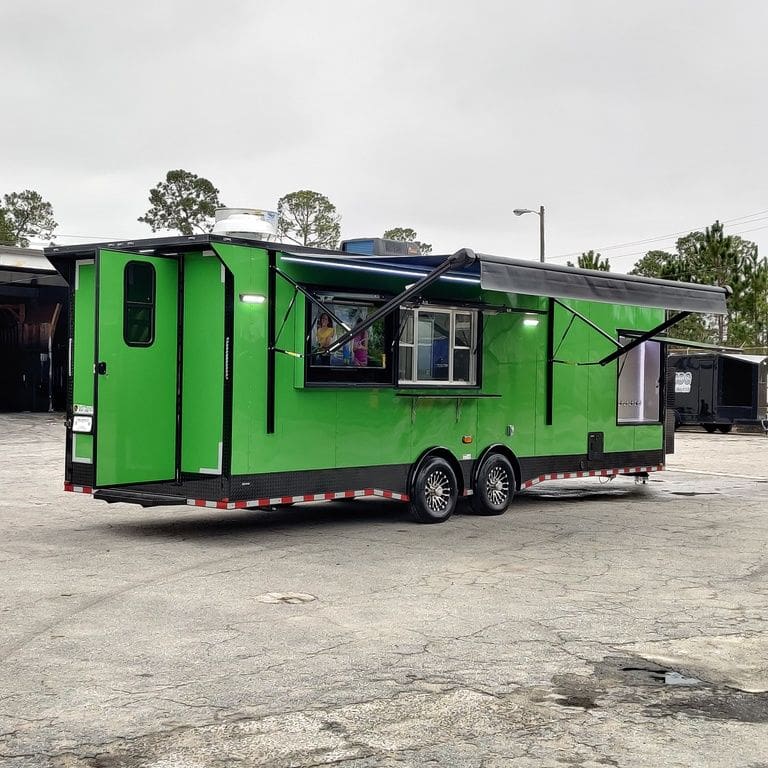
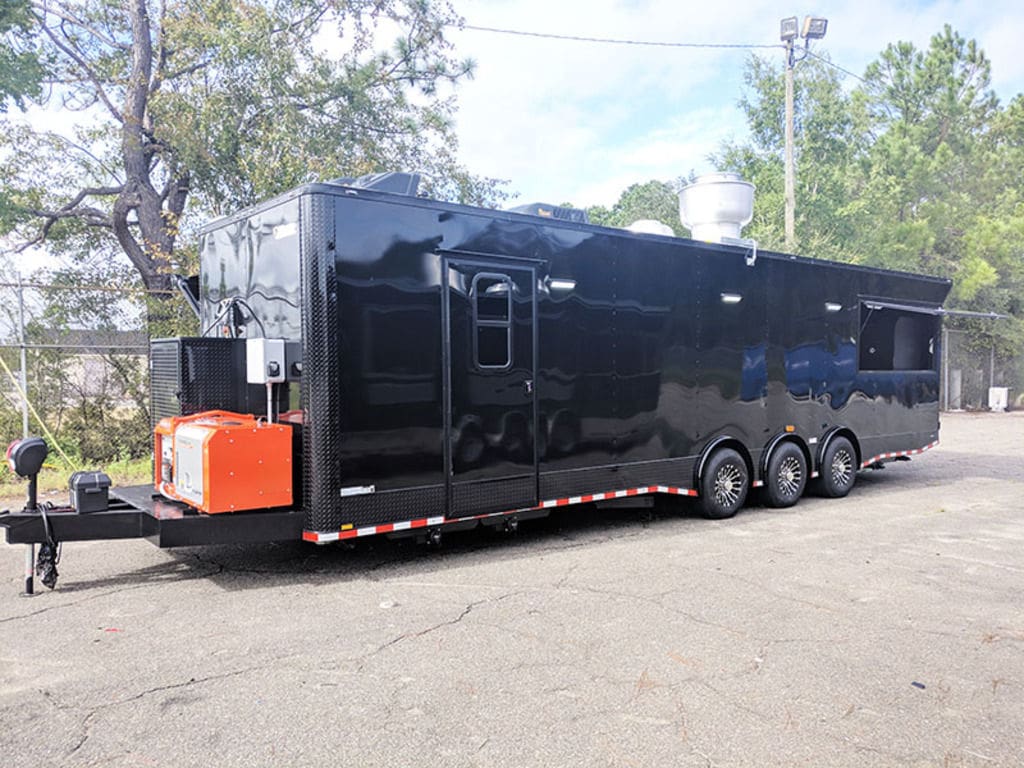
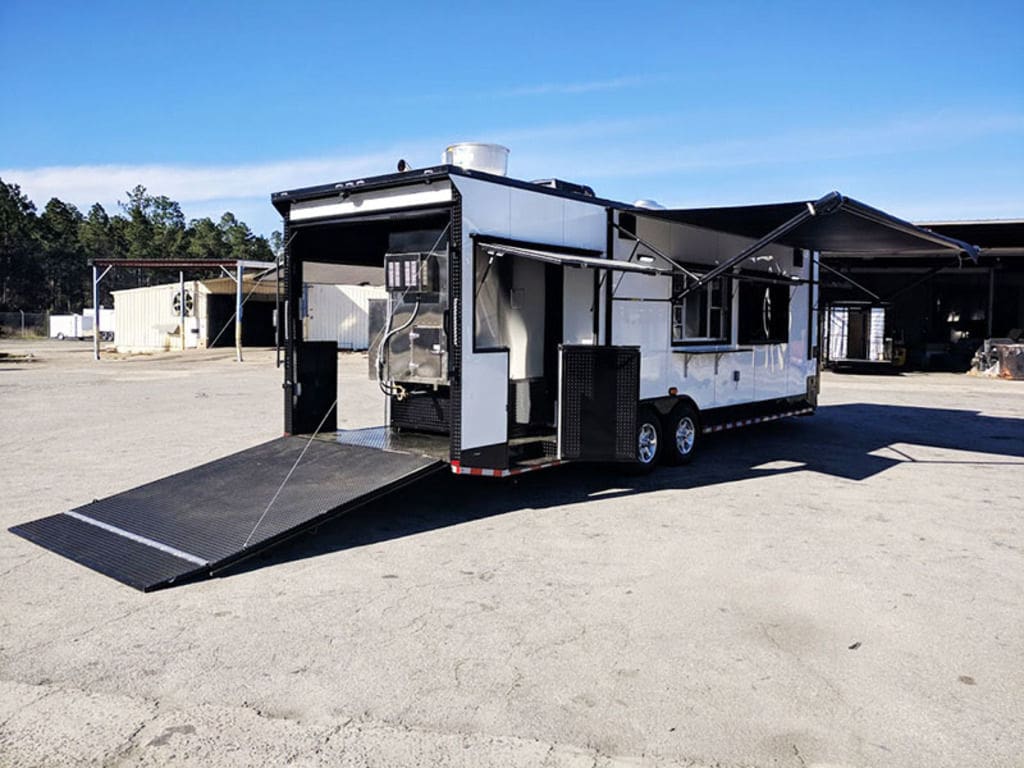
30′ BBQ Trailer with Ole Hickory Smoker & Porch (SDG-224)
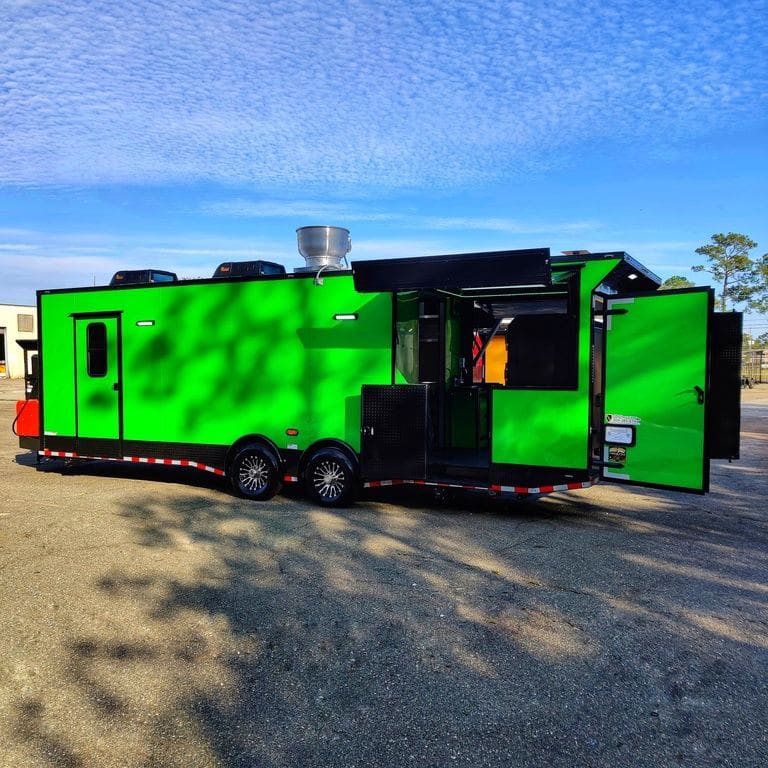
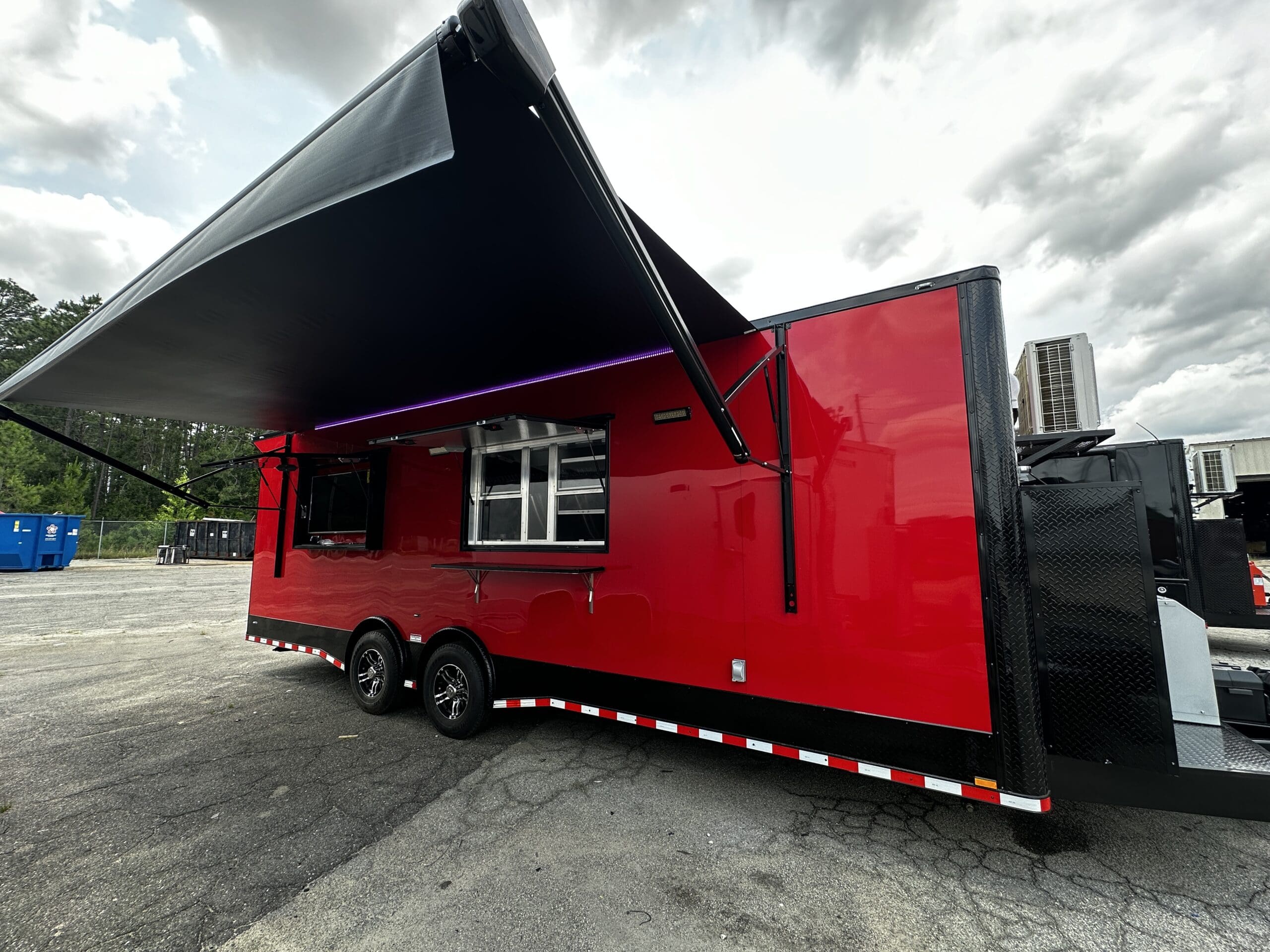
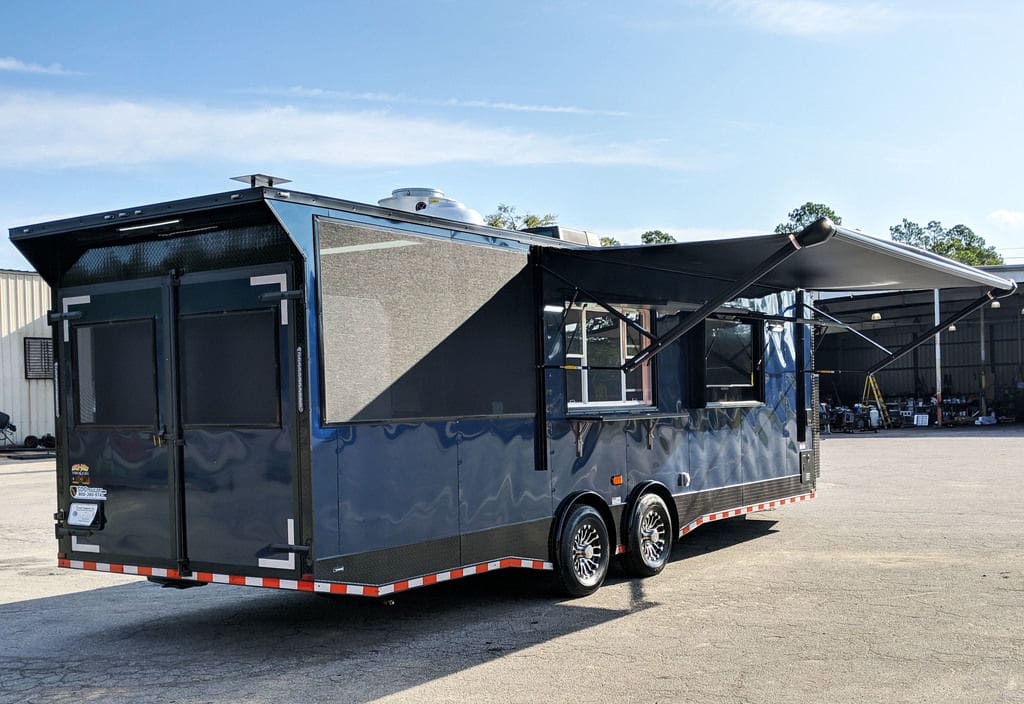
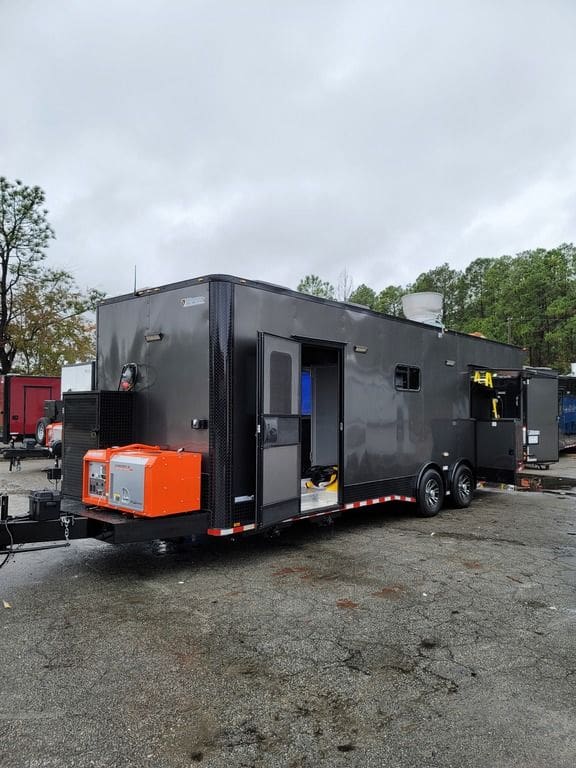
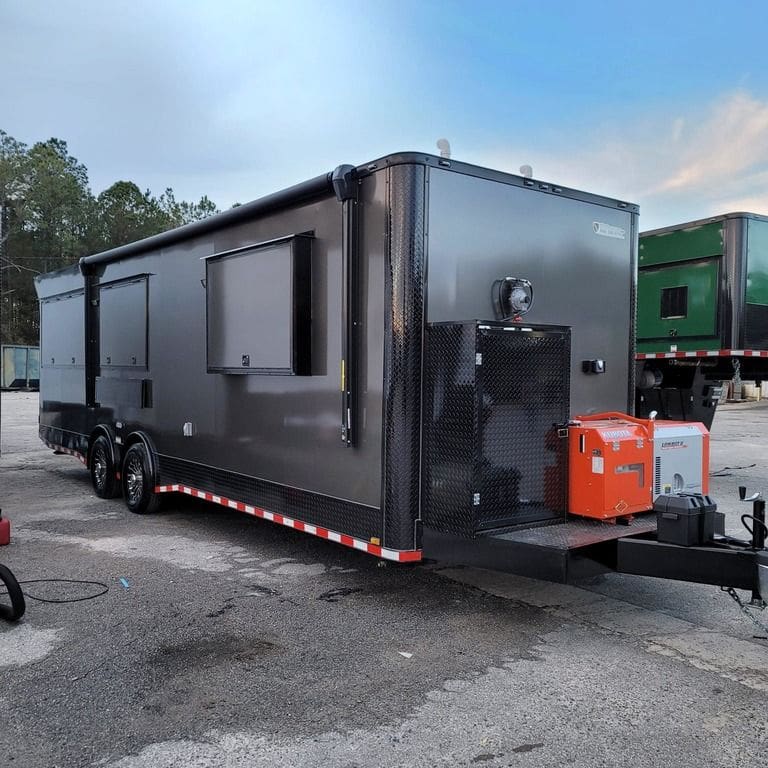
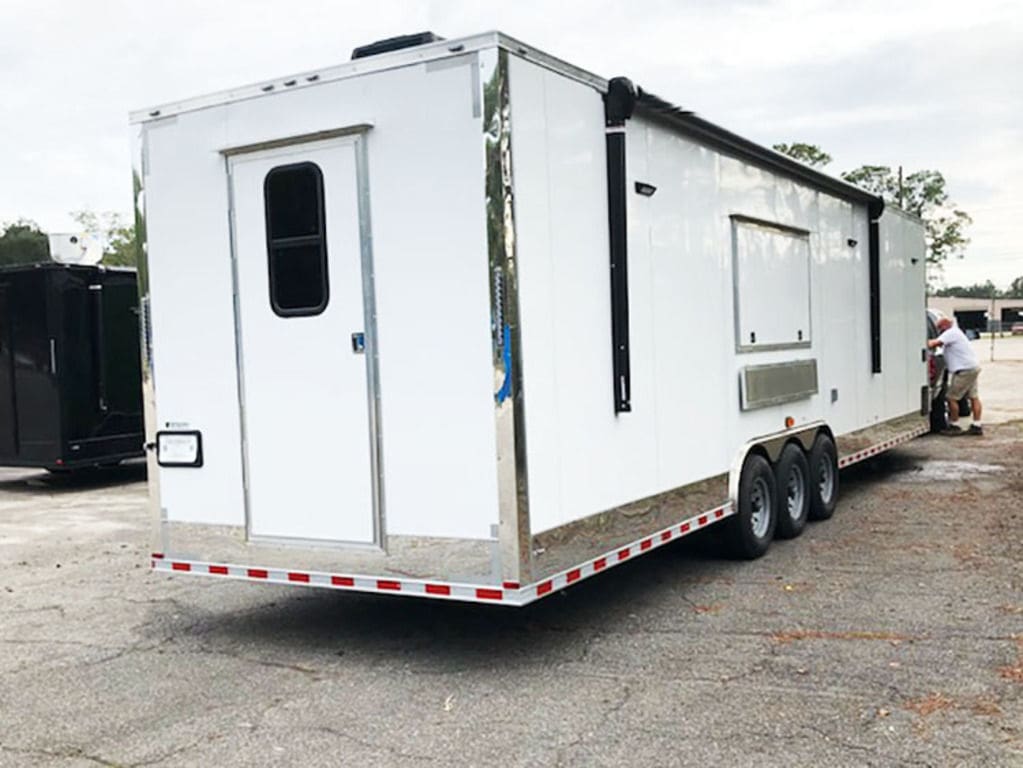
26′ BBQ Trailer with Ole Hickory Smoker & Porch (SDG-501)
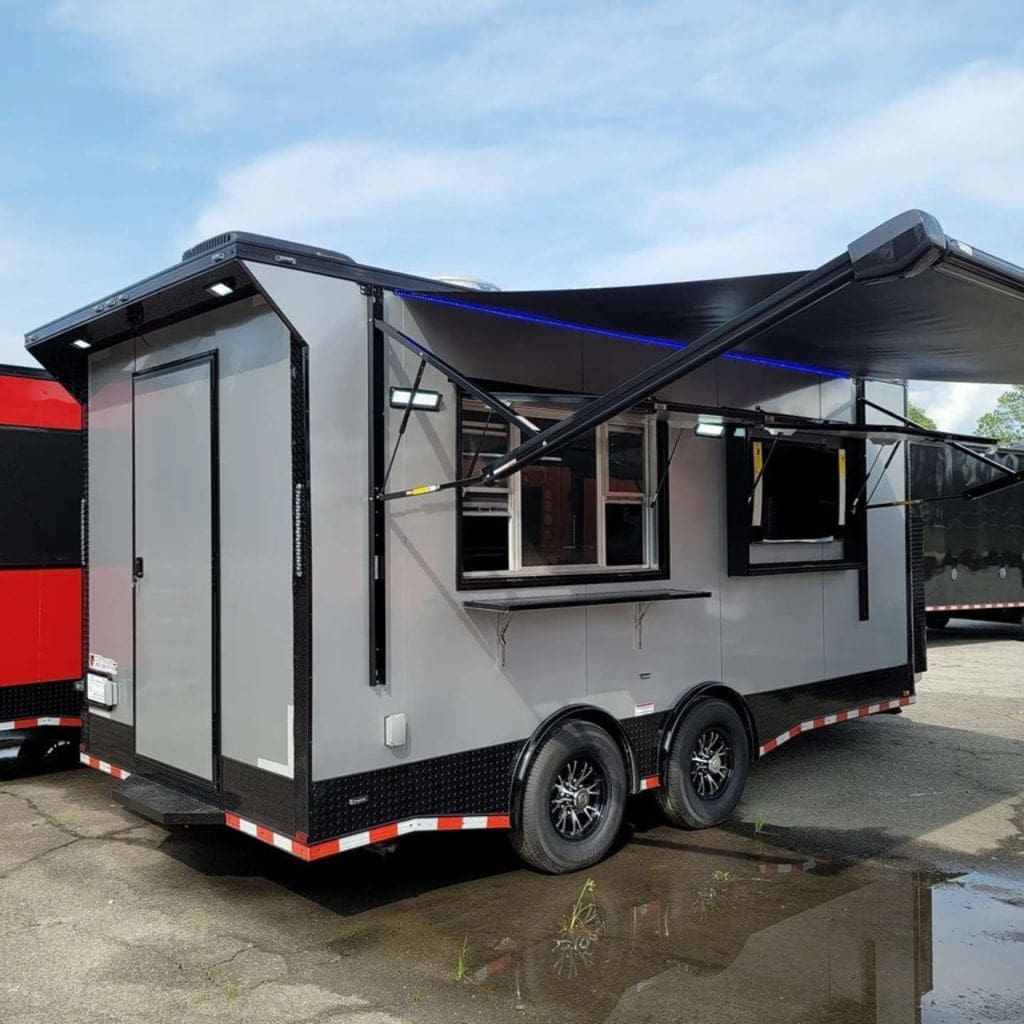
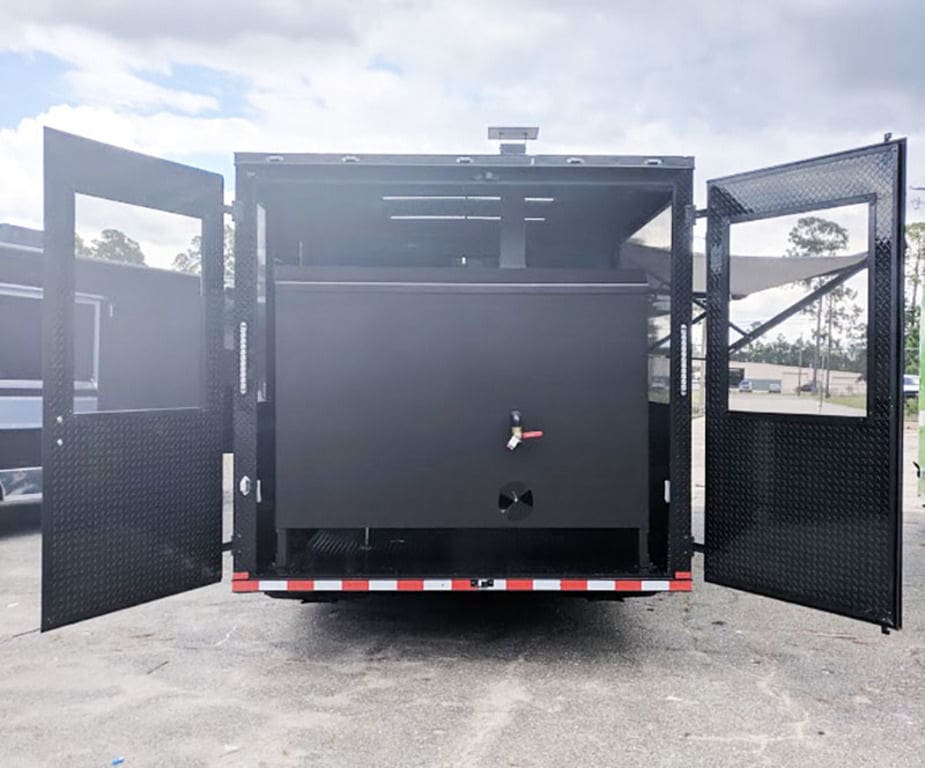
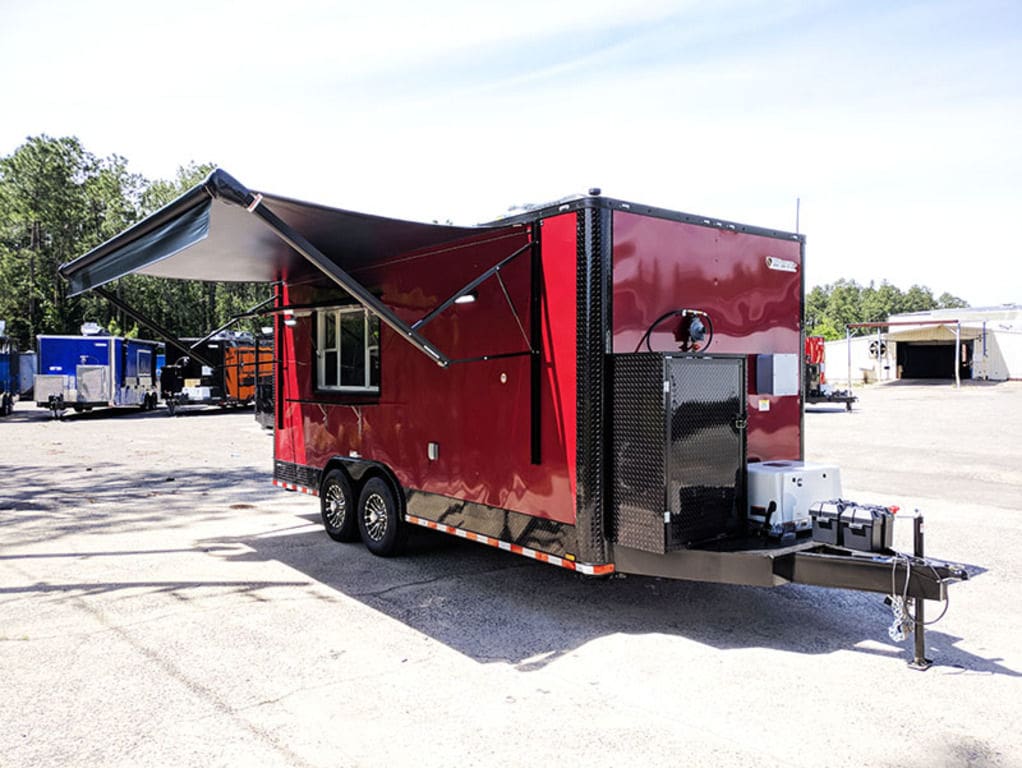
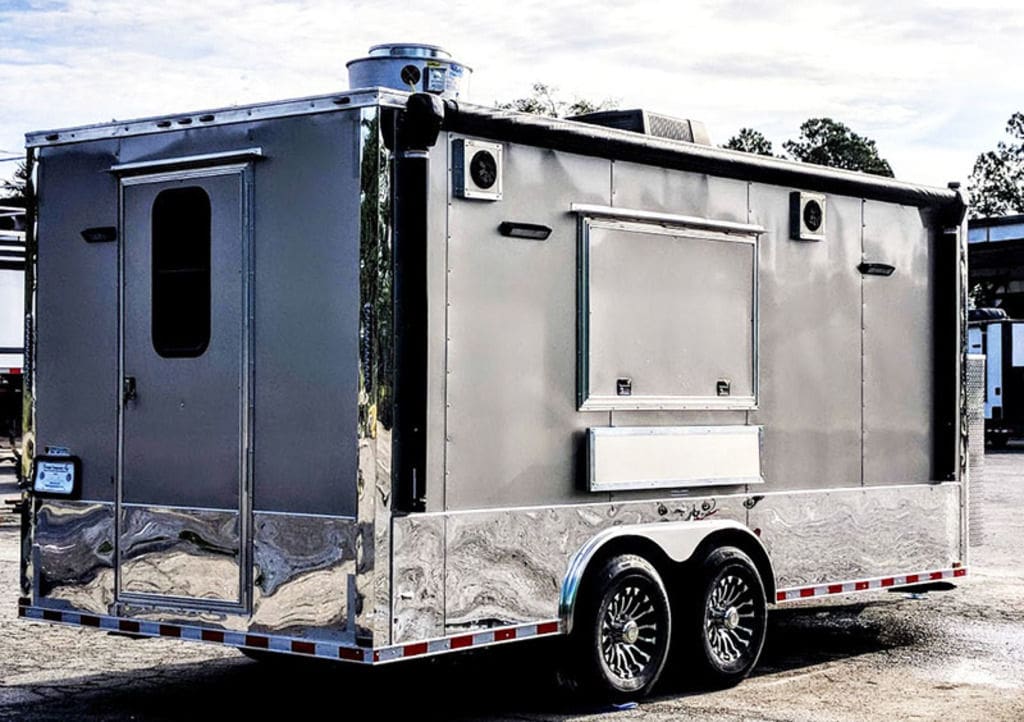
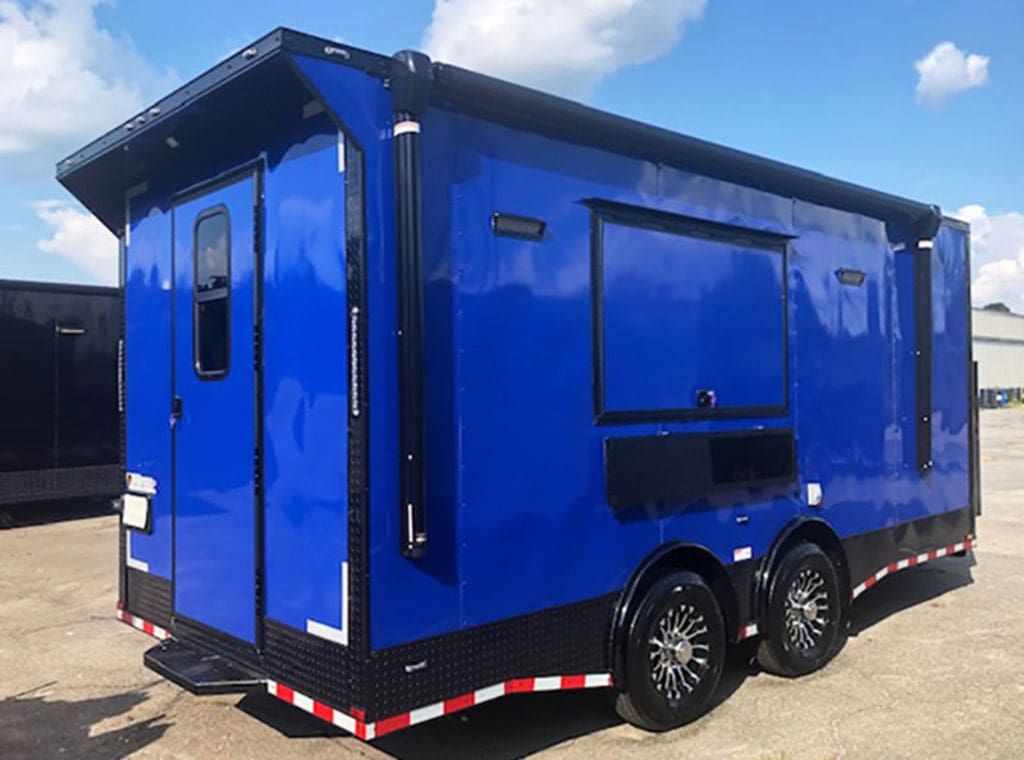
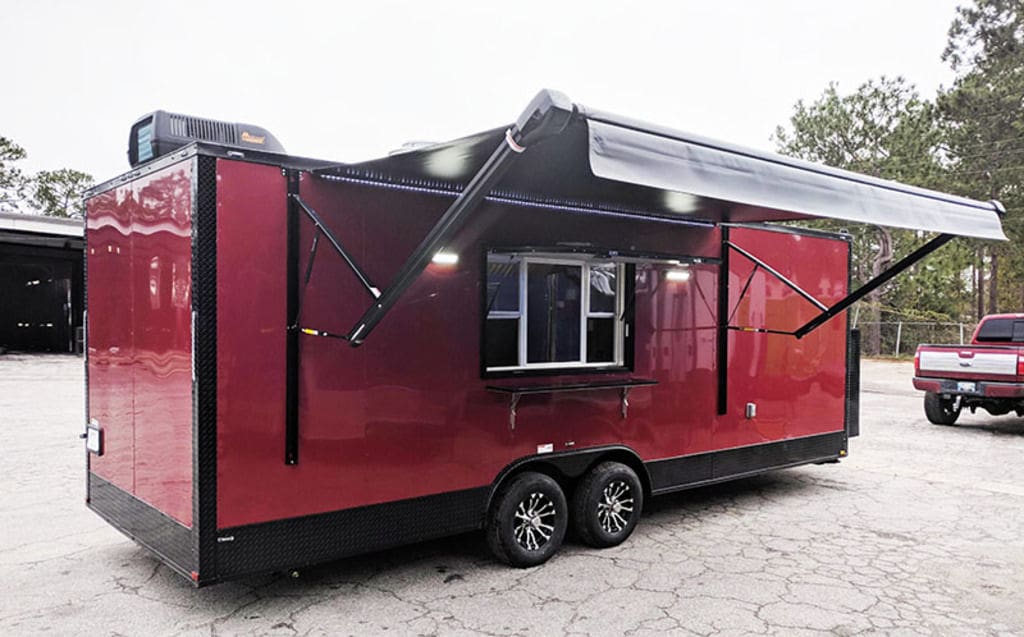
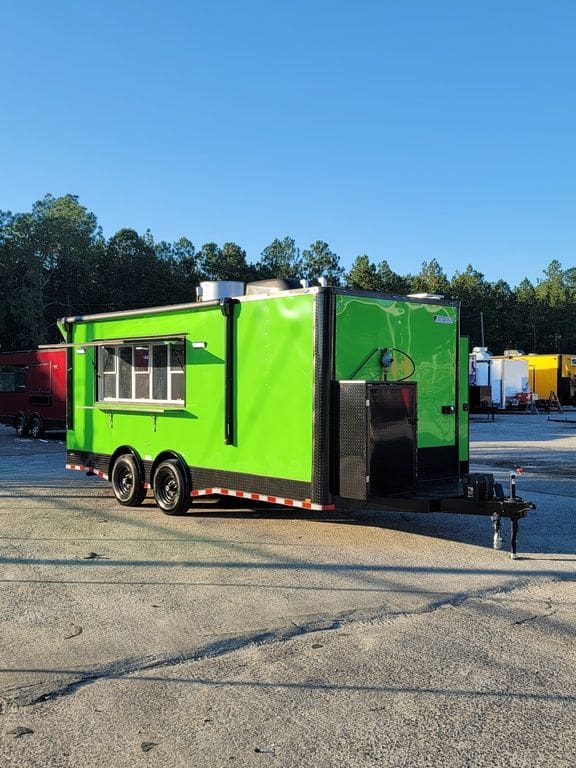
Shipping to your city? See food trailers for sale near you →
What they are
Food & Concession Trailers Built To Order.
Food and concession trailers are the line most of our shop time goes into: concession, BBQ and vending builds that have to cook, serve and keep working through a full event day. Every one is fabricated and finished to order at our Waycross, Georgia shop, then shipped anywhere in the fifty states.
Lengths run 18 to 48 feet, from a bumper pull through to a triple-axle gooseneck. The 46 food and concession trailers we have finished were built at $55,995 to $174,999. Every custom food trailer is priced on its own final spec, so read that range as what we have built, not a price list.
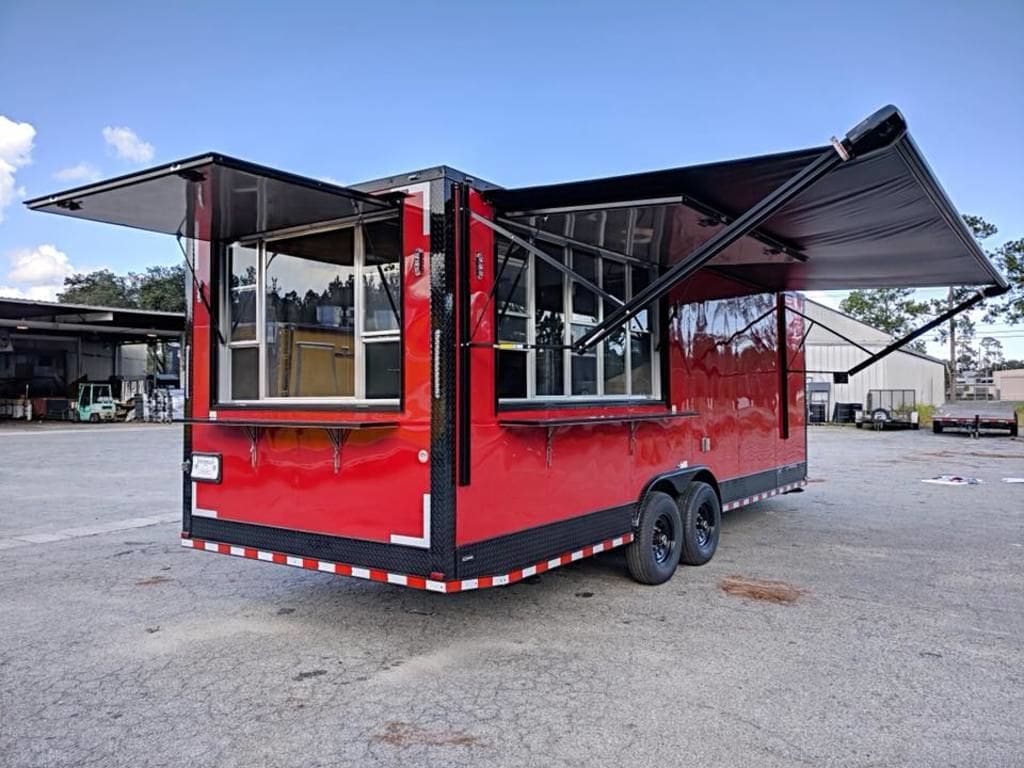
The serving side is the part everyone sees: one to three windows under a gullwing awning that hinges up from the roof line, with a stainless counter running the length of it. Behind that sits the working kitchen — a commercial hood with baffle filters and fire suppression, the cooking line, refrigeration and a three-compartment sink, all lined in stainless so it can actually be cleaned down.
Because these are built to order, the length follows the equipment rather than the other way round. A two-window build serving from one side is a different trailer from a gooseneck with a rear porch and an Ole Hickory in the back, even at the same footprint.
Finished trailers are listed as they come off the floor; a build to your own spec takes the same line.
Photographed on our own lot
Bumper pull through triple-axle gooseneck
Fitted to a concession build
Or matched to your branding
What they cost
What A Food Trailer Costs To Build.
We do not publish a price list, because every trailer is quoted on its final spec. We do publish what each finished build cost. If you are comparing food trailers for sale against a build of your own, these are the figures from the last 46 custom food trailers and concession builds off our floor, grouped by the length that drives them.
22 builds. Bumper pull, a focused menu, one or two operators working it.
21 builds. Where most full-service concession trailers land: hood line, prep, cold storage.
3 builds. Gooseneck, full pit setup, walk-in cold space and a serving porch.
Prices shown are what each trailer was built at, and are a guide only — every build is quoted individually on its final spec.
The cheapest of the 46 is the Southern Dimensions 20′ Catering Food Trailer (SDG-207), built at $55,995. The dearest is the SDG TRAILERS 8.5x48TTTA3 (SDG-311) at $174,999: 48 feet, finished in Victory Red, with a 21,000-watt Kubota generator on it.
Four things move the figure inside a band more than the length does. The pit, if there is one. The commercial hood and its suppression package. How much refrigeration goes in. And the generator, which runs from 7,000 watts up to the 21,000-watt Kubota on SDG-311.
If you are costing one out line by line, we break down what a fully equipped build costs component by component, and lease or buy compares the two routes on cash flow and ownership. SDG offers lease-to-own and loan options on a build.
What goes into them
Specified Around The Work.
Every one of these is engineered to its own spec. The list below is what we build in most often — not a fixed package.
Gullwing serving awning
Hinged at the roof line and propped open on struts — it shades the serving counter and closes flush for transit.
Commercial hood and suppression
Stainless hood with baffle filters over the cooking line, plumbed and vented in-house.
Ole Hickory and custom pits
Our most requested smoker, installed and plumbed. Custom pit rigs built to your spec as well.
Onboard power
Onan, Kubota, Honda and Durawatt packages up to 21,000 watts, sized to the cooking and climate load rather than the floor area.
Serving windows and porches
One to three windows, open or covered rear porches with rail on the longer builds.
Finish
14 factory colours from the SDG colour card, with blackout, polished or diamond-plate trim.
From the shop floor
46 Food And Concession Trailers We Have Built.
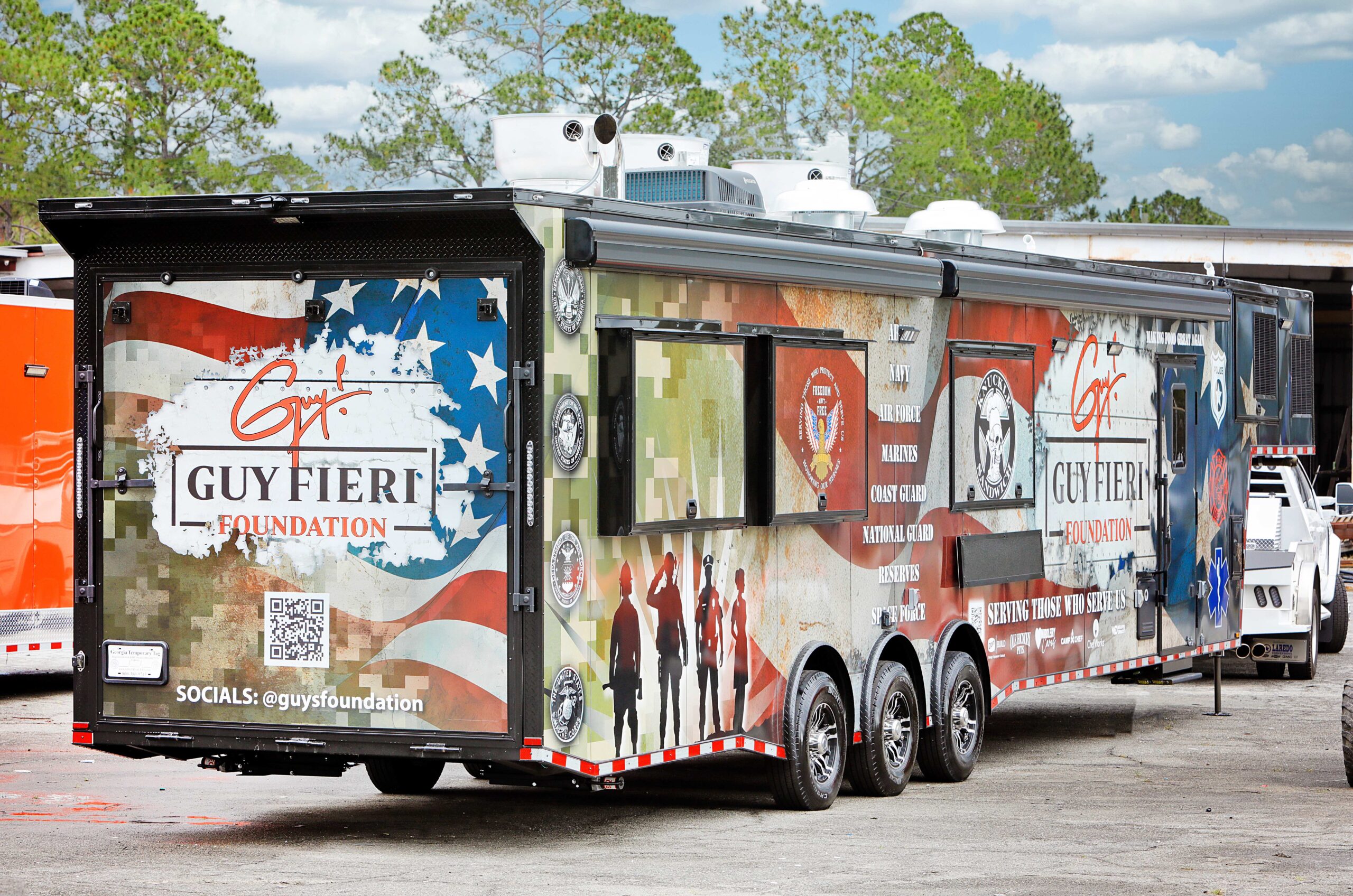
Each of these was built for a customer and photographed on our own lot. The Built at figure is what that trailer was built at, not an asking price. If you are shopping concession trailers for sale, the twelve below are picked to span the range rather than the top of it: 20 feet to 48 feet, $55,995 to $174,999.
A food trailer for sale off a dealer’s lot was specified by somebody else. Every one here was specified by the customer who ordered it.
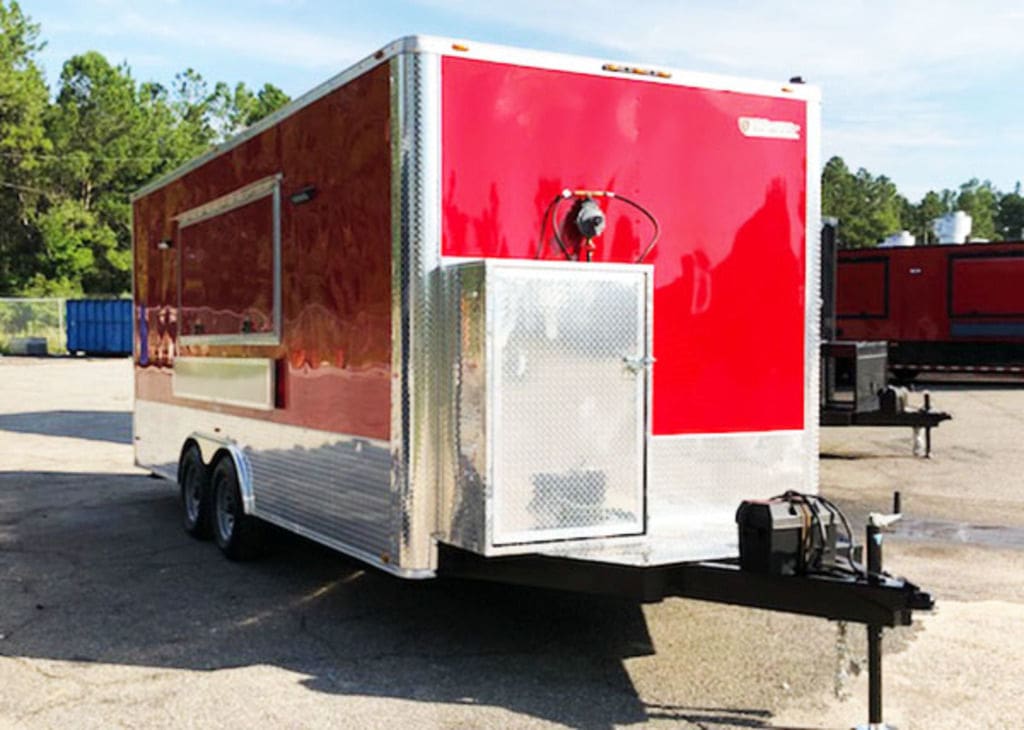
Southern Dimensions 20′ Catering Food Trailer (SDG-207)
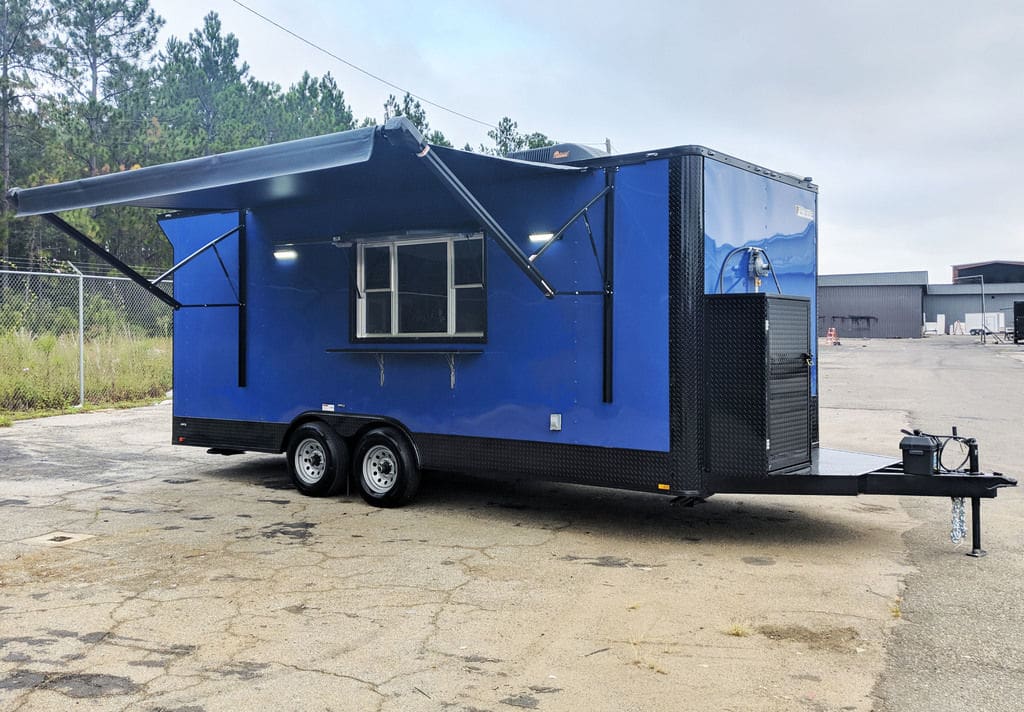
Southern Dimensions 20′ Loaded Food Trailer (SDG-650)
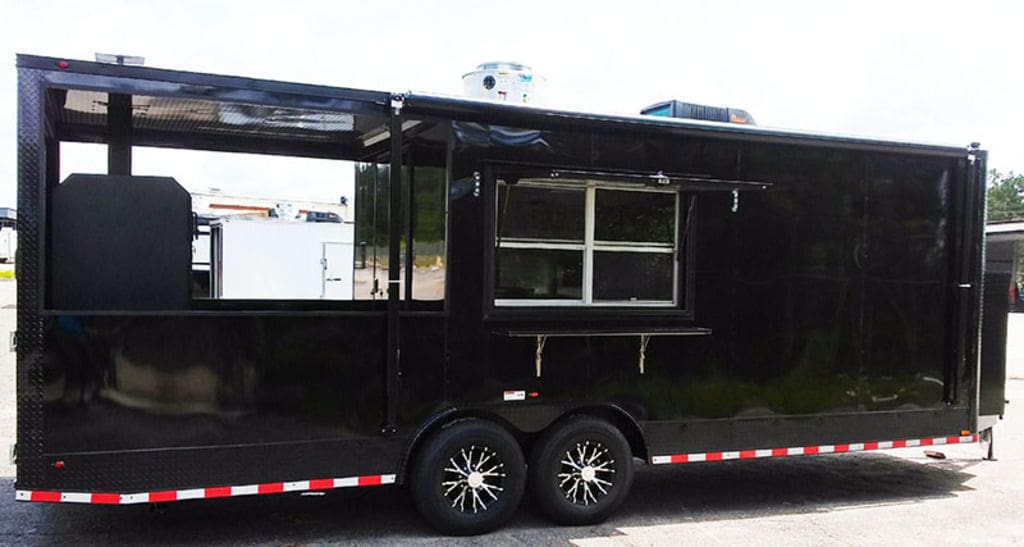
Southern Dimensions BBQ Concession Trailer 24 Foot- Black Out Trailer with Smoker (SDG-244)
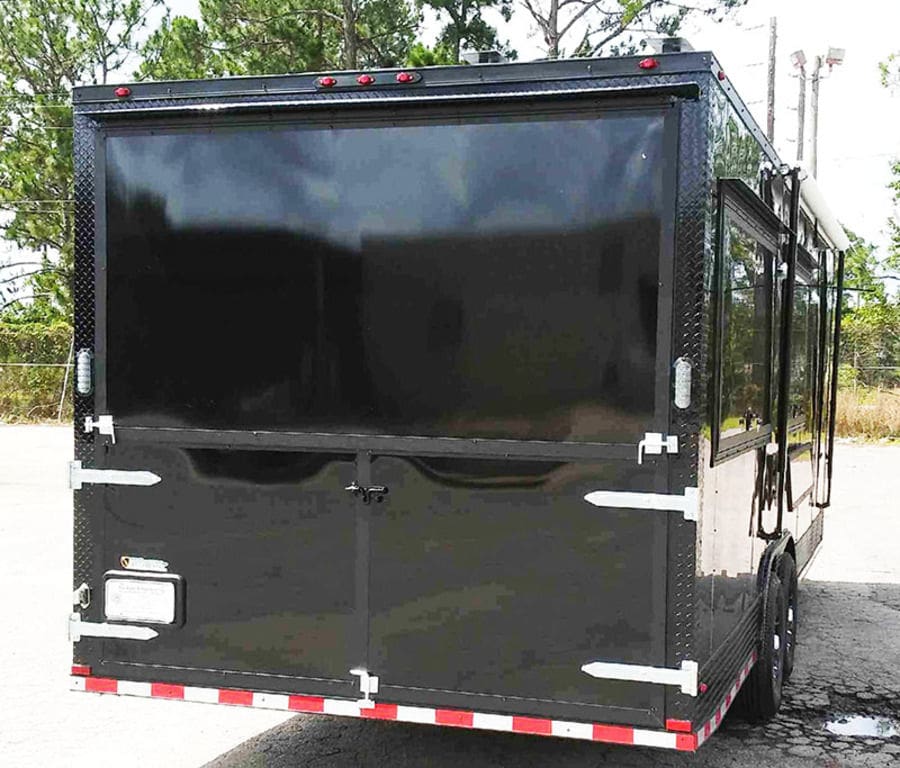
Southern Dimensions Concession Trailer 22 Foot- With OLE Hickory CTO and Gull Doors (SDG-234)
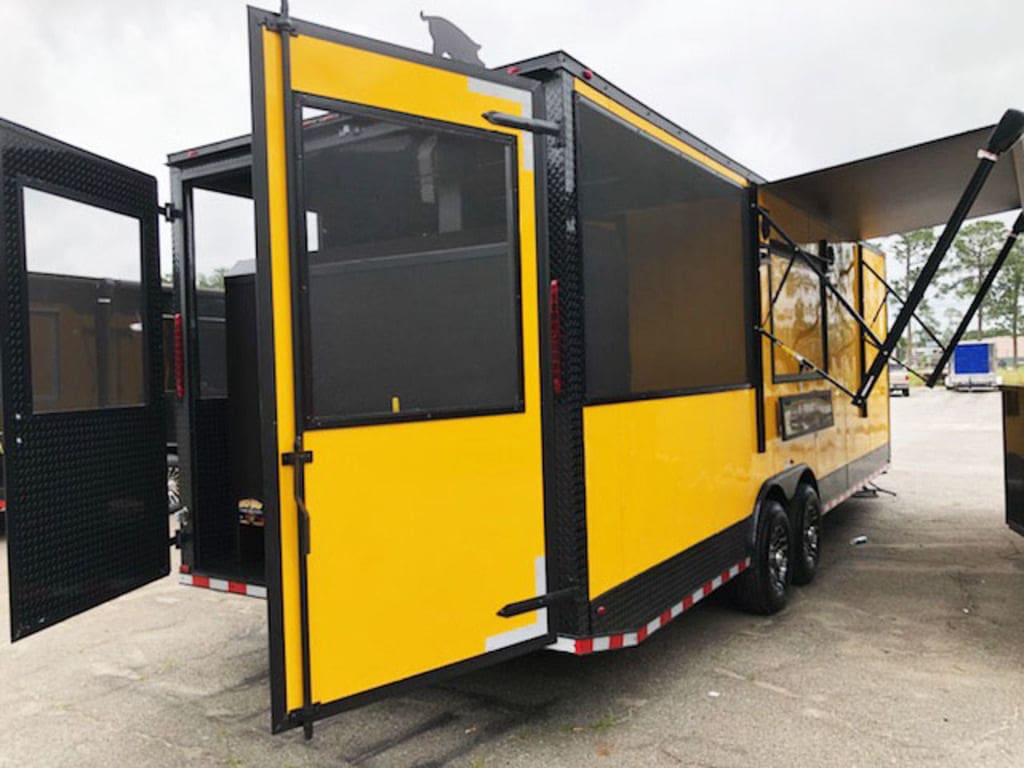
Southern Dimensions 26′ Yellow with Black Trim Concession Food Trailer (SDG-235)
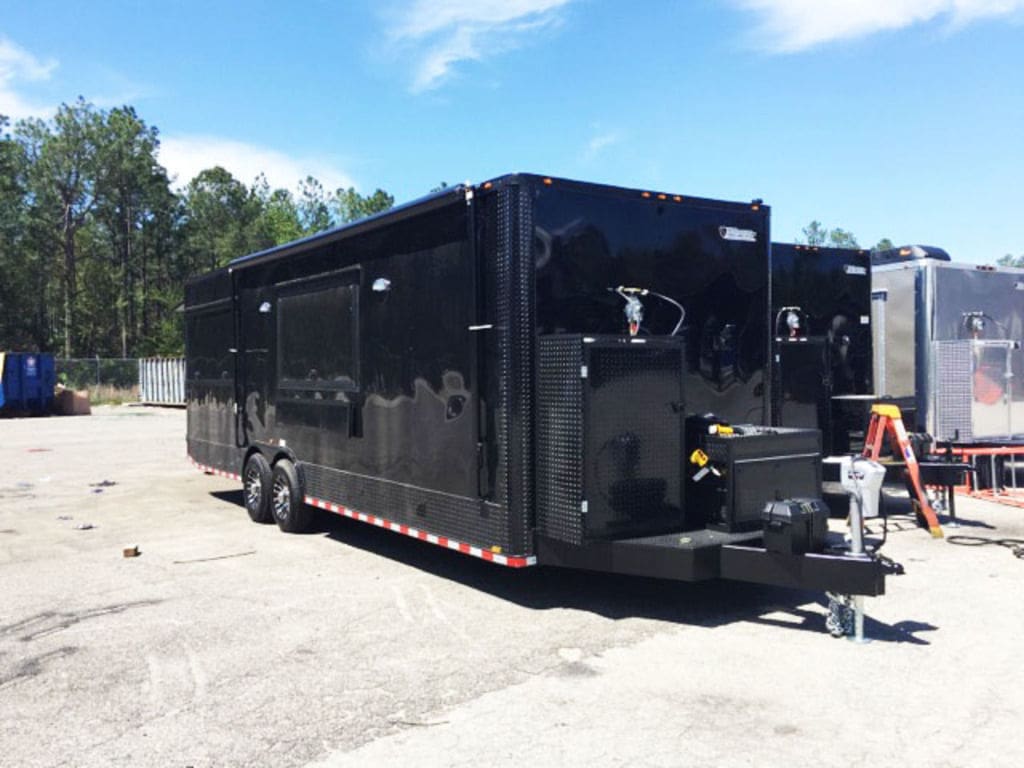
Southern Dimensions 26 foot Mobile Food Trailer- Generator (SDG-245)
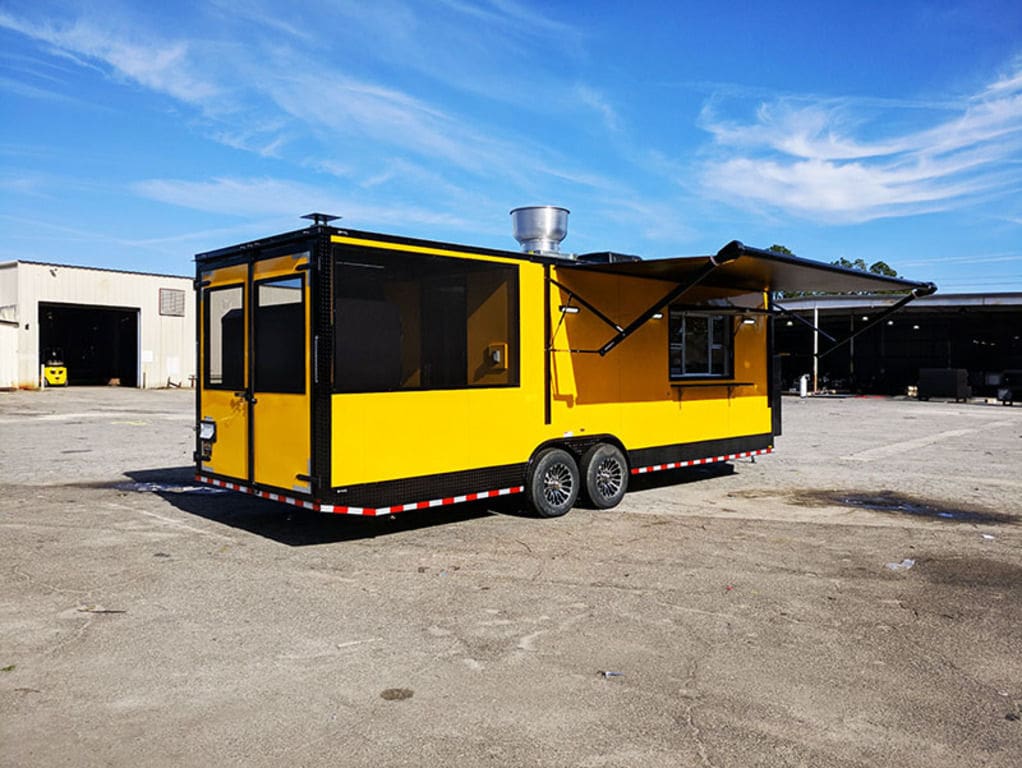
Southern Dimensions 26-BBQ Vending Trailer (SDG-214)
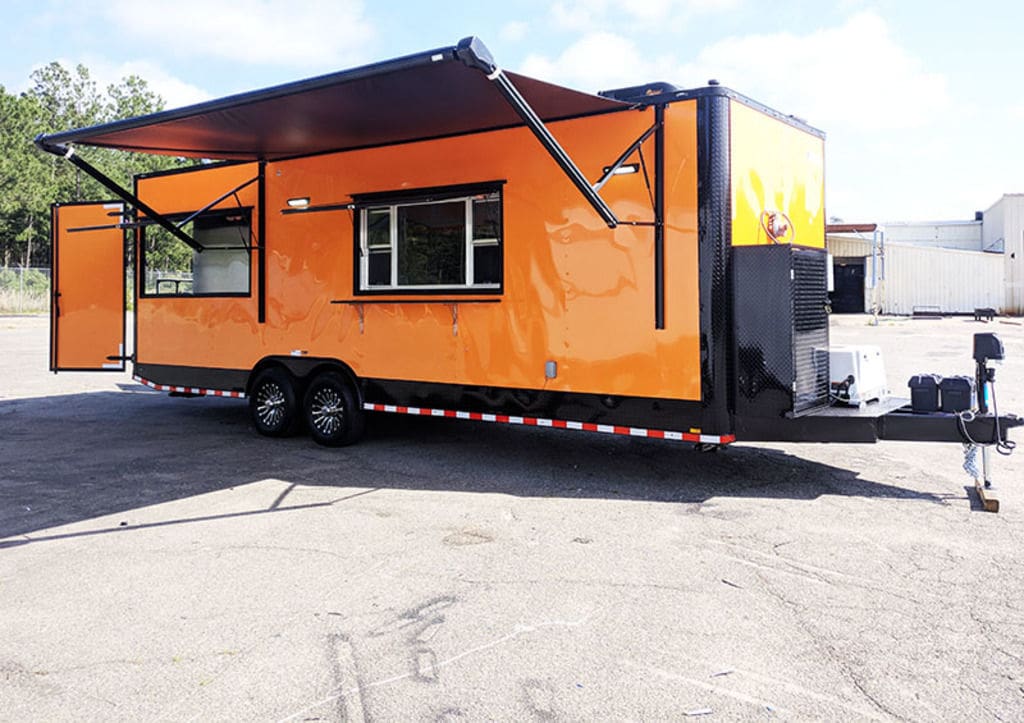
Southern Dimensions 26 Concession Vending Trailer with Ole Hickory ELIB Installed (SDG-501)
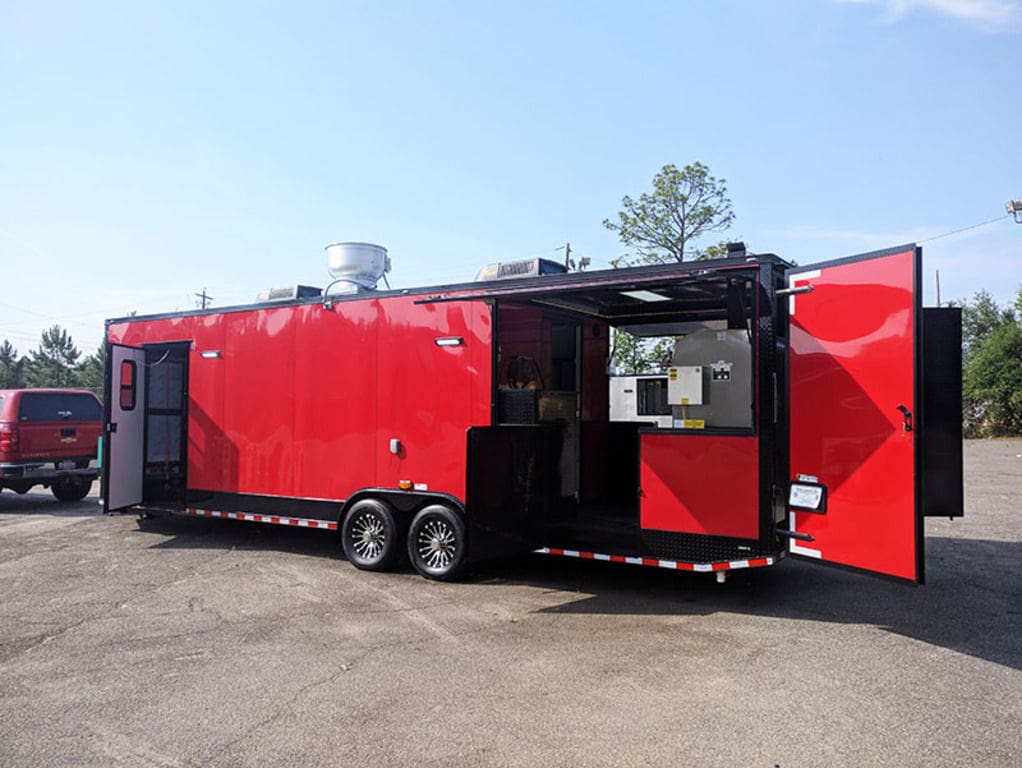
Southern Dimensions BBQ Concession Trailer – OLE Hickory PIT- Loaded (SDG-224)
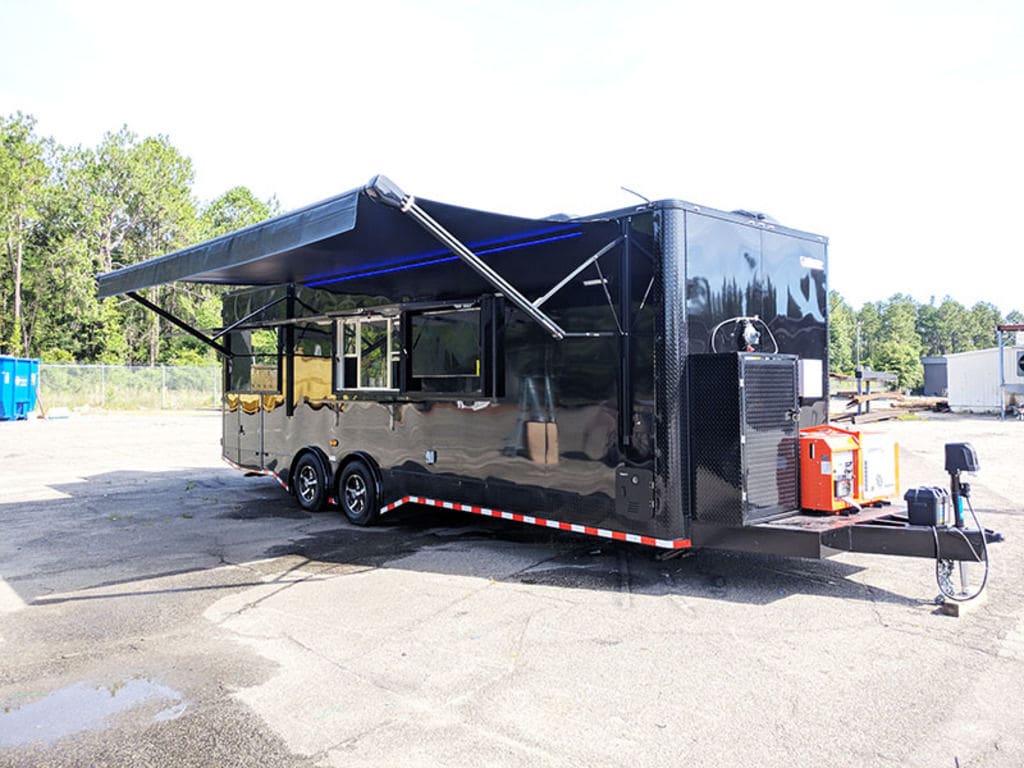
Southern Dimensions 28′ Vending Trailer with FEC 300 Installed (SDG-209)
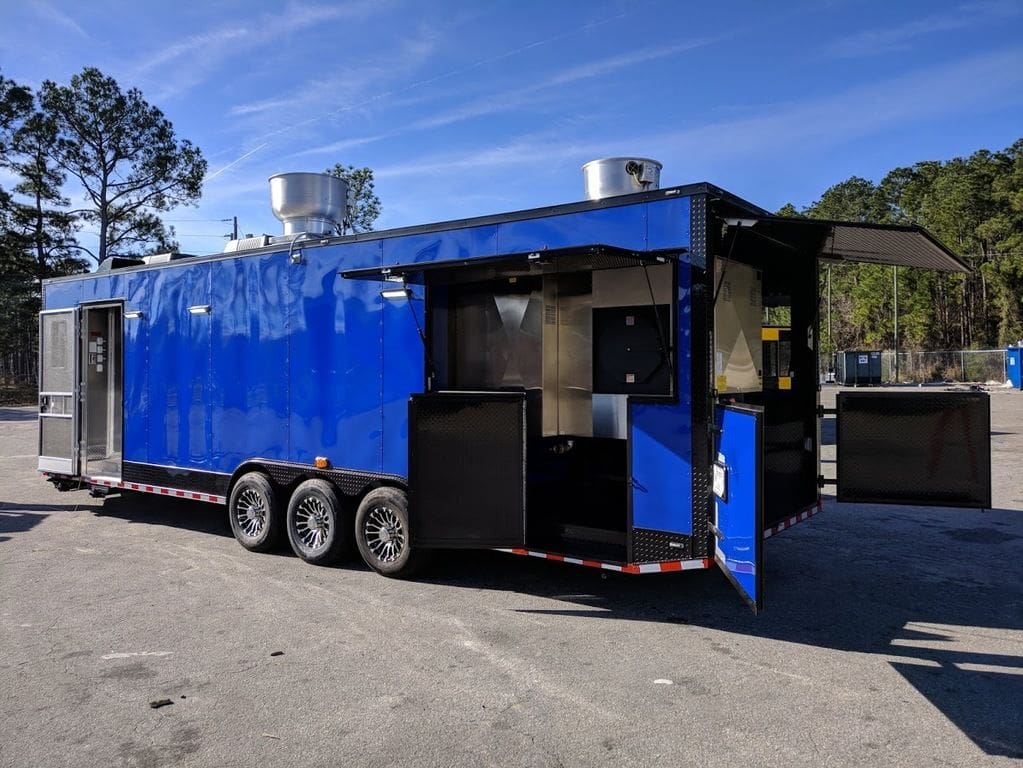
Southern Dimensions 30-BBQ Vending Trailer (SDG-211)
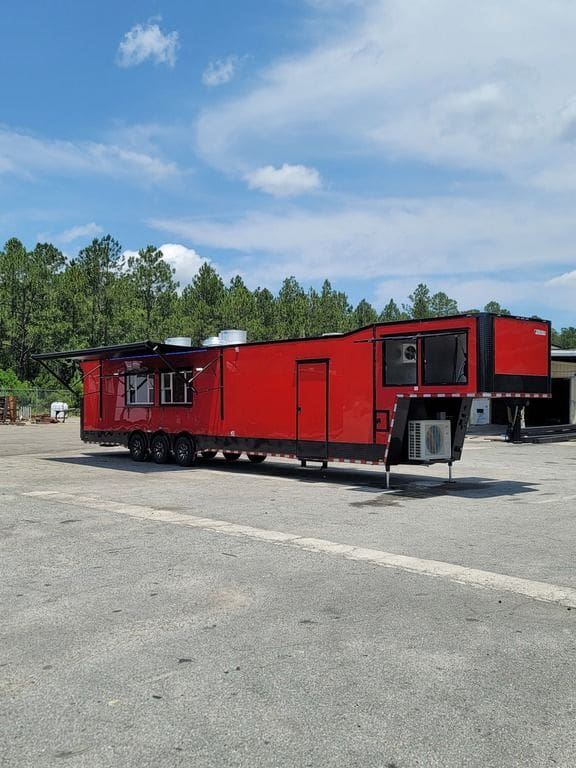
SDG TRAILERS 8.5x48TTTA3 (SDG-311)
Inside the line
The Lines Inside This One.
Food and concession covers more than one kind of build. Two of them are different enough to have their own page.
BBQ and smoker builds
Sixteen of the 46 are BBQ trailers and smoker builds, 22 to 47 feet, built at $62,995 to $172,650. Six carry an Ole Hickory pit installed and plumbed at our shop. The pit is the heaviest, hottest thing in the trailer, so it sets the chassis, the axle count and the floor plan before the serving side is drawn.
Coffee builds
A coffee trailer is laid out around the machine rather than a cook line: counter length, water and waste, and the electrical capacity to pull shots all day. Same shop, same 18 to 48 foot range, and the same build-to-order line.
Everything we have finished
All 46 food and concession builds are listed with their length, generator, finish and the figure each one was built at. Vending and catering layouts sit in there too: five of the 46 are vending builds, 19 to 34 feet.
Proof
Related Build Stories.
Sizing the build
How To Choose A Food Trailer Size.
Start from the equipment and the crew, then pick the length. A trailer sized around a floor plan you can actually work in beats one bought on price and retrofitted afterwards.
18 to 26 feet, bumper pull
A focused menu and one or two operators. Tows behind a properly rated three-quarter or one-ton truck, and parks in vending spaces the longer rigs cannot take. 22 builds in this range, $55,995 to $97,102 as built.
28 to 36 feet
Where most full-service concession builds land. Room for a hood line, prep, cold storage and two to four people working without crossing paths. 21 builds, $75,125 to $130,125 as built.
40 to 48 feet, gooseneck
Full pit setups, walk-in cold space and a serving porch. Needs a truck and hitch rated for the loaded weight, not the empty weight. 3 builds, $143,000 to $174,999 as built.
Two constraints usually decide this before the menu does. The first is the tow vehicle you already own, because loaded weight is what matters. The second is where you will actually park and serve, since festivals, fairgrounds and city vending spaces each set their own footprint limits. Tell us both and we will size the trailer to them. There is a longer guide to lengths, layouts and equipment fit, and a separate one on what fits in a small food trailer.
Before you order
Food Trailer Questions We Get Asked.
How much does a food trailer cost?
Most of the food and concession trailers we have built came in between $55,995 and $174,999, and length is what moves it: 18 to 26 feet ran $55,995 to $97,102, 28 to 36 feet ran $75,125 to $130,125, and the 40 to 48 foot goosenecks ran $143,000 to $174,999. Those are what each trailer was actually built at, not a price list. The pit, the hood and suppression package, refrigeration and the generator move the figure inside a band, so we quote each build on its final spec. Send the menu and we will price the trailer that runs it.
How long does it take to build?
Equipment lead times set the schedule more than fabrication does. Once the floor plan is approved we can give you dates, and the items that usually drive them are the pit, the hood and suppression package, and any refrigeration ordered in.
Do I need a commercial hood?
If you are cooking with grease-producing equipment, yes. NFPA 96 governs ventilation control and fire protection for commercial cooking operations, and health departments generally apply it to mobile kitchens as well as fixed ones. We build the stainless hood and suppression in rather than leaving it for you to add later.
Will it meet my local health code?
Tell us the jurisdiction and we will build to it. Mobile food unit rules come from your state or county health department, generally working from the FDA Food Code, and they vary on sink counts, water tank capacity and finish surfaces. Those are specification decisions made before fabrication, not modifications afterwards.
Do you ship outside Georgia?
Yes. We build in Waycross and ship to all fifty states. Plenty of customers collect from the shop, and we arrange transport for the rest.
Food trailer or concession trailer?
The terms overlap and we build both from the same shop. A food trailer is the general term for a towable mobile kitchen. A concession trailer usually describes one laid out for volume service to a queue, with the window placement, counter depth and interior flow arranged around throughput.
Can I buy a finished trailer, or is every build to order?
Every trailer on our recent builds page was designed, fabricated and finished to a customer’s spec. Nothing there is off a shelf, and yours would be built the same way. That is why the figure beside each one is labelled Built at rather than a price: it is what that trailer cost to build, not an asking price. If your dates are fixed, say so with the quote request, because equipment lead times set the schedule more than fabrication does.
Yours next
Built To Cook.
Built To Last.
Tell us what it has to do and our team will price it personally.