
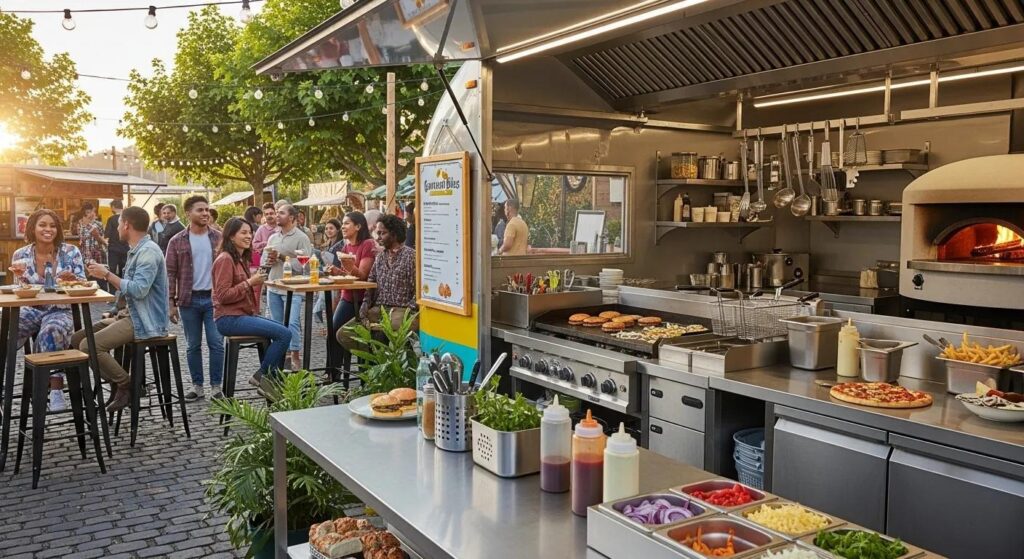
Choosing the right size food trailer is crucial for the success of your mobile food business. The dimensions of your trailer not only dictate the amount of equipment you can fit but also influence the overall workflow and efficiency of your operations. In this guide, we will explore the various factors that determine the ideal food trailer size, including standard dimensions, layout options, and equipment fit. By understanding these elements, you can make an informed decision that aligns with your business needs and enhances your operational efficiency. We will cover how trailer lengths affect kitchen options, the standard dimensions available, and how to optimize your layout for maximum productivity. Additionally, we will discuss essential equipment types suitable for different trailer sizes and how food and concession trailers can support your custom food trailer purchase.
How Do Food Trailer Lengths Affect Your Mobile Kitchen Options?
The length of a food trailer significantly impacts the layout and equipment choices available to mobile kitchen operators. Longer trailers typically provide more space for equipment, allowing for a more comprehensive menu and better workflow. Conversely, shorter trailers may limit the types of equipment you can use, which can affect your operational efficiency. Understanding the relationship between trailer length and kitchen options is essential for optimizing your mobile food business.
For instance, a 16-foot trailer may accommodate a basic setup with essential cooking equipment, while a 24-foot trailer can support a more extensive kitchen with multiple cooking stations. This flexibility can lead to improved service speed and customer satisfaction.
What Are Standard Food Trailer Dimensions and Length Categories?
Food trailers come in various standard dimensions, categorized primarily by their length. Common length categories include:
- 10-12 Feet: Ideal for small operations or niche markets, these trailers are compact and easy to maneuver.
- 14-16 Feet: Suitable for moderate menus, offering a balance between space and mobility.
- 18-24 Feet: Best for larger operations, allowing for extensive equipment and menu options.
These dimensions cater to different business models, ensuring that operators can find a trailer that meets their specific needs.
How Does Trailer Length Influence Equipment Fit and Workflow?
Trailer length plays a critical role in determining equipment fit and overall workflow. A longer trailer allows for better zoning of kitchen areas, which can enhance efficiency. For example, separating cooking, preparation, and serving areas can streamline operations and reduce wait times.
When planning your trailer layout, consider the types of equipment you need. A longer trailer can accommodate larger appliances, such as commercial ovens and fryers, while a shorter trailer may require more compact, multi-functional equipment. This consideration is vital for maximizing space utilization and ensuring that your kitchen operates smoothly.
Which Layouts Optimize Workflow in Custom Food Trailers?
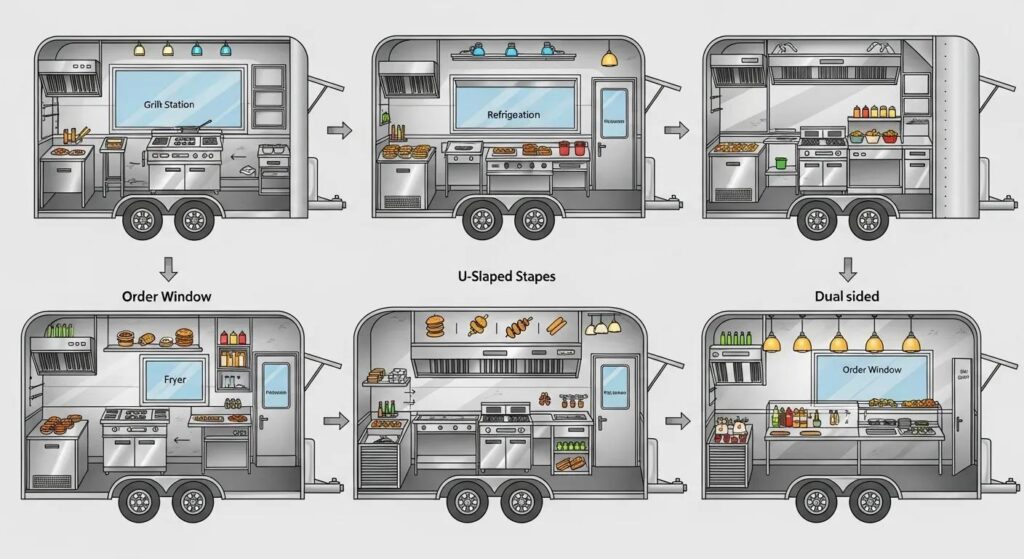
Optimizing workflow in a food trailer involves selecting layouts that facilitate efficient movement and task execution. Common layouts include: food trailers.
- Linear Layout: Equipment is arranged in a straight line, allowing for easy access and movement.
- U-Shaped Layout: This design creates distinct zones for cooking, preparation, and serving, enhancing workflow.
- L-Shaped Layout: Offers flexibility and can accommodate various equipment types while maintaining efficient movement.
Each layout has its benefits, and the choice depends on the specific needs of your operation and the equipment you plan to use.
What Are Common Custom Food Trailer Layouts and Their Benefits?
Custom food trailers can be designed with various layouts to suit different operational needs. Some common layouts include:
- Open Kitchen Layout: Provides visibility to customers, enhancing the dining experience and promoting transparency.
- Closed Kitchen Layout: Offers a more traditional setup, focusing on efficiency and space utilization.
- Hybrid Layout: Combines elements of both open and closed kitchens, allowing for flexibility in service style.
These layouts can be tailored to fit the specific dimensions of your trailer, ensuring that you maximize both space and functionality.
How Can Layout Selection Improve Mobile Kitchen Efficiency?
Selecting the right layout is crucial for improving efficiency in a mobile kitchen. A well-planned layout can reduce the time spent moving between stations and enhance the overall speed of service.
For example, placing cooking equipment near the serving window can minimize the distance food travels, reducing wait times for customers. Additionally, incorporating storage solutions that are easily accessible can streamline operations and keep the kitchen organized.
What Equipment Fits Best in Different Food Trailer Sizes?
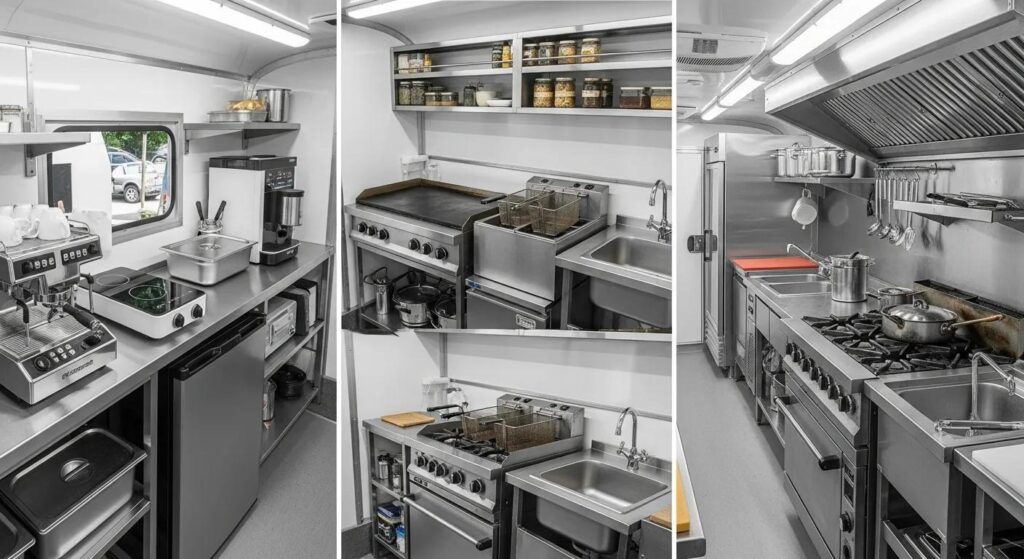
Choosing the right equipment for your food trailer size is essential for maximizing functionality. Here are some recommendations based on trailer sizes:
- Small Trailers (10-12 Feet): Compact grills, fryers, and refrigeration units are ideal for limited space.
- Medium Trailers (14-16 Feet): A combination of larger cooking appliances and prep areas can be accommodated.
- Large Trailers (18-24 Feet): Full-sized ovens, multiple fryers, and extensive refrigeration systems can be utilized.
Selecting equipment that fits your trailer size ensures that you can operate efficiently without compromising on quality or service.
Which Essential Equipment Types Are Suitable for Various Trailer Lengths?
Different trailer lengths require specific types of equipment to ensure optimal performance. Here’s a breakdown: food and concession trailers
- Short Trailers (10-12 Feet): Essential items include a small grill, a fryer, and a compact refrigerator.
- Medium Trailers (14-16 Feet): Operators can include a larger grill, multiple fryers, and a prep table.
- Long Trailers (18-24 Feet): Full commercial kitchens can be installed, including ovens, fryers, and extensive refrigeration.
Choosing the right equipment based on trailer length is crucial for maintaining operational efficiency and meeting customer demands.
How to Plan Equipment Placement for Optimal Space Utilization?
Planning equipment placement in your food trailer is vital for maximizing space utilization. Here are some strategies to consider: food and concession trailers.
- Zoning: Create distinct areas for cooking, preparation, and serving to streamline workflow.
- Vertical Space: Utilize shelving and storage solutions to keep the floor area clear and organized.
- Accessibility: Ensure that frequently used items are easily accessible to minimize movement and improve efficiency.
By carefully planning equipment placement, you can create a functional and efficient mobile kitchen that meets your operational needs.
Achieving such a functional and efficient mobile kitchen often involves principles of compact design and ergonomic planning, as highlighted by research into optimizing kitchen spaces.
Optimizing Compact Kitchen Layouts for Space & Ergonomics
The aim of this work is to create a compact, ergonomic kitchen layout with optimum space utilization which should be low maintenance and safe to use, and it should suit the ever-changing lifestyles of the elderly, bachelors, and working couples.
A smart compact kitchen layout to optimize space utilization, 2021
How Can Financing Support Your Custom Food Trailer Purchase?
Financing options can significantly impact your ability to purchase a custom food trailer. Understanding the available options is essential for making an informed decision.
Many lenders offer financing specifically for food trailers, allowing you to spread the cost over time. This can make it easier to invest in a larger trailer that meets your business needs without straining your budget.
What Financing Options Are Available for Food Trailer Buyers?
Food trailer buyers have several financing options to consider:
- Traditional Loans: Offered by banks and credit unions, these loans typically require good credit and collateral.
- Leasing: Allows you to use a trailer without purchasing it outright, making it a flexible option for new businesses.
- Alternative Lenders: Online lenders may offer more accessible financing options, though often at higher interest rates.
Exploring these options can help you find the best financing solution for your custom food trailer purchase.
How Does Financing Influence Trailer Size and Customization Choices?
Financing can significantly influence your choice of trailer size and customization options. A larger trailer may require a more substantial investment, which could be challenging without adequate financing.
Understanding your budget and the financing options available can help you make informed decisions about the size and features of your food trailer. This ensures that you select a trailer that not only meets your operational needs but also aligns with your financial capabilities.
If you’re looking for a food and concession trailer, consider exploring various models to find the perfect fit for your business needs.