

Financing a custom food trailer requires balancing upfront cost, monthly cash flow and long-term ownership goals. This guide summarizes the main financing routes—loans, leases and alternative payment plans—and the qualification factors you’ll need to address to secure capital and launch or expand a mobile food business.
Key Takeaways
- Primary options: loans, leases and alternative payment methods.
- Traditional loans favor strong credit and collateral; SBA options can offer better terms.
- Leasing lowers upfront costs and can include maintenance.
- Alternatives include crowdfunding and peer-to-peer lending when bank financing is limited.
- Credit score and down payment size materially affect eligibility and rate.
- Customization raises asset value and can affect loan or lease terms.
- Lease-to-own lets operators build equity while conserving initial capital.
What Are the Main Financing Options for Custom Food Trailers?
Entrepreneurs mainly choose between traditional loans, leasing agreements and alternative funding. Each option trades ownership, upfront cost and monthly payments differently; select the path that fits your cash flow, credit profile and growth plan.
- Traditional Loans: Bank, credit union or online loans with fixed or variable rates; often require collateral or a strong personal/business credit history.
- Leasing Agreements: Lower initial cash outlay, option to upgrade, sometimes maintenance included; ownership depends on lease type.
- Alternative Payment Methods: Crowdfunding, peer-to-peer lending or niche equipment financiers provide flexibility when traditional credit is limited.
Match the financing structure to whether you prioritize immediate ownership, lower monthly payments or conserving working capital.
How Do Custom Food Trailer Loans Work?

Loans provide capital to buy or build a trailer and are repaid with interest over a set term. Lenders set the loan amount, rate and schedule based on creditworthiness, collateral and business viability.
Types of Loans Available
Common loan types:
- Secured loans — collateral (often the trailer) lowers risk and rates.
- Unsecured loans — no collateral but higher rates and stricter qualification.
- SBA loans — government-backed options that can carry favorable terms for qualifying small businesses.
Prepare financial statements, a concise business plan and personal credit information for lender review.
What Are Food Trailer Lease Options and Their Benefits?
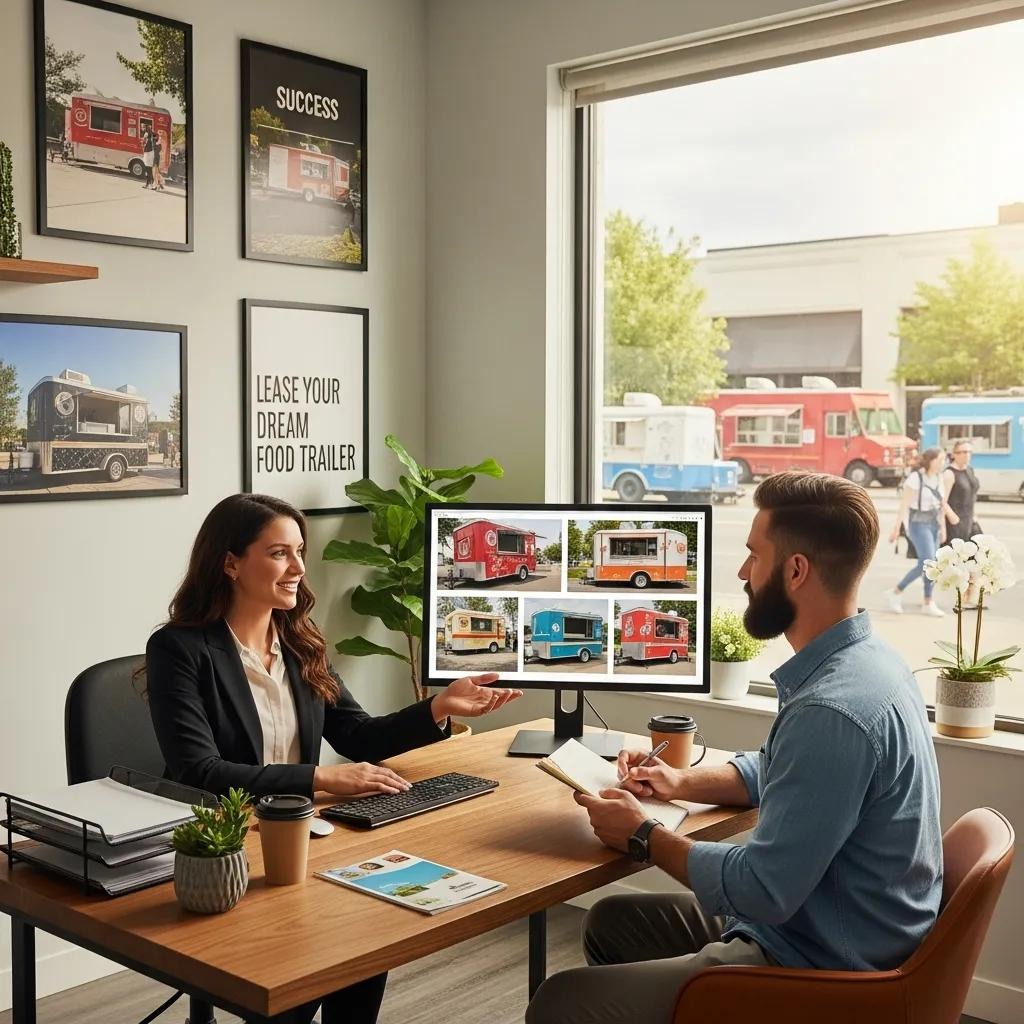
Leasing lets you operate without the purchase price, conserving cash for operations or inventory. Terms vary by provider; some leases include maintenance or offer flexible end-of-term options.
For many start-ups, leasing provides an accessible alternative when traditional bank financing is limited or unavailable.
Leasing Equipment for Small Businesses & Startup Financing
Leasing of equipment, machinery and technology enables small businesses to acquire essential assets; banks are often reluctant to finance new business concepts (European Commission, 2013).
Influence of financing source on small business performance, M Mikic, 2013
Types of Leases
- Operating lease — short-term use without ownership; return or buy at term end.
- Finance lease — long-term structure that can lead to ownership; payments are higher but build equity.
Benefits of Leasing
- Lower upfront cost than buying.
- Operational flexibility and the option to upgrade equipment.
- Maintenance may be included, reducing unexpected repairs.
How to Qualify for Financing: Loan and Lease Requirements
Approval depends on creditworthiness, down payment and documentation. Understanding lender criteria helps you prepare a stronger application.
Creditworthiness
Credit score and history heavily influence rates and terms; better scores typically yield better pricing.
Down Payment Requirements
Expect down payments roughly in these ranges: loans 10–30%, leases often 5–10%, subject to lender and borrower’s profile.
Necessary Documentation
Prepare tax returns, financial statements and a concise business plan that shows projected revenue and operating assumptions.
What Credit Scores and Down Payments Are Needed?
Most traditional lenders prefer scores at or above the mid-600s; alternative lenders may accept lower scores at higher cost. Down payments vary by product and credit strength.
Minimum Credit Score Requirements
A credit score of ~650 is a common benchmark for conventional loans; specialty lenders have different thresholds.
Typical Down Payment Percentages
- Loans: commonly 10–20%.
- Leases: often 5–10%, depending on provider and terms.
Examples of Down Payments
Estimate down payments as a percentage of total cost; adjust projections for added customization or equipment upgrades.
How Does the Loan Application Process for Food Trailers Operate?
Apply with prepared documents, a clear business plan and realistic financial projections. Lenders review income, credit and business viability before issuing terms.
Preparation Steps
Gather business and personal tax returns, financial statements and identification to streamline lender review.
Documentation Needed
- Proof of income
- Business financial statements
- A concise business plan with market analysis
Sources include banks, credit unions and online lenders that specialise in small-business equipment financing.
What Payment Plans Are Available for Financing Mobile Food Trailers?
Payment plans can be structured to match seasonality and cash flow; discuss options with lenders to find a sustainable schedule.
Types of Payment Plans
- Monthly installments — fixed or variable payments.
- Seasonal payments — lower payments off-season, higher during peak months.
- Balloon payments — smaller monthly payments with a larger final payment.
Lenders often negotiate schedules to support startup cash flow and growth phases.
How Do Lease to Own Food Trailer Programs Work?
Lease-to-own applies part of lease payments toward purchase; at term end you typically have the option to buy the trailer for a residual price.
Structure of Lease-to-Own Agreements
Monthly payments include a purchase allocation; terms specify the residual buyout and any final purchase conditions.
Benefits of Lease-to-Own
- Ownership potential at term end.
- Lower initial costs compared with buying outright.
- Flexibility to decline purchase if needs change.
Potential Drawbacks
Lease-to-own can cost more over time than conventional purchase financing; calculate total cost before committing.
What Are Typical Monthly Payment Amounts and Terms?
Payments depend on financed amount, interest rate and term. Longer terms lower monthly payments but increase total interest paid.
Payment Structures
Payments vary with price, rate and term—budget for variability and build conservative cash-flow scenarios.
Factors Influencing Payment Amounts
- Loan amount
- Interest rate
- Loan term
Ask lenders for sample amortization to compare monthly cost and total interest across terms.
How Can Customization Impact Financing Options for Food Trailers?
Custom features raise capital cost and may require additional valuation or documentation; discuss modifications with lenders or lessors before finalizing specs.
Loan Eligibility
Lenders may require appraisals or contractor quotes to support the added value of custom upgrades.
Lease Terms
Some lessors limit modifications or adjust terms for customized units; get written approval for planned changes.
Payment Structures
Higher capital costs raise monthly payments; include customization in financial forecasts.
Does Trailer Customization Affect Loan or Lease Terms?
Yes — customization can change appraised value, collateral treatment and risk assessment, affecting rates, down payment and term offers.
Cost Implications
Custom features increase total cost and may require larger loans or different lease structures.
Loan Terms Variations
Lenders may adjust interest rates, repayment periods or collateral requirements based on perceived resale value and risk.
Creditworthiness Considerations
A strong credit profile helps secure favorable terms despite customization-related risk.
How to Request Quotes and Financing for Custom Trailer Features
Define specifications and budget, then request itemized quotes and financing proposals so lenders can review accurate cost and valuation data.
Defining Requirements
Document intended equipment, capacity and regulatory needs before contacting manufacturers and lenders.
Researching Manufacturers
Choose manufacturers with relevant experience and references; ask for completed project photos and client contacts.
Preparing a Request for Quote
Provide clear specs, intended use and any permitting or code requirements so quotes and financing offers are comparable.
To explore options for your business, consider reviewing custom trailers.
Many entrepreneurs find that financing a custom food trailer is a decisive step in establishing a mobile food operation.
Prospective operators should review food and concession trailers as an initial reference for model selection and specifications.
Frequently Asked Questions
What factors should I consider when choosing between loans and leases for a food trailer?
Consider cash flow, how quickly you want ownership, down payment capacity and maintenance responsibilities; loans favor ownership, leases favor lower upfront cost and flexibility.
Are there specific lenders that specialize in food trailer financing?
Yes—some banks, credit unions and specialty equipment lenders focus on mobile food businesses; online and peer-to-peer platforms are additional options.
How can I improve my chances of getting approved for a food trailer loan?
Improve your credit score, reduce outstanding debt, prepare a concise business plan with projections and have documentation and a down payment ready.
What are the potential risks of financing a custom food trailer?
Risks include lower-than-expected revenue, higher customization costs, and potential difficulty reselling a highly specialized unit—plan conservatively.
Can I refinance my food trailer loan in the future?
Refinancing is possible to obtain better terms; compare fees versus projected savings before proceeding.
What should I do if I can’t make my food trailer loan payments?
Contact your lender immediately to discuss deferment, restructuring or temporary relief, and review operating expenses to find savings.
Conclusion
Choosing the right finance path for a custom food trailer means weighing upfront cost, monthly payments and ownership goals. Prepare strong documentation, compare loan and lease offers, and include customization in your financial model to arrive at a solution that supports a sustainable mobile food business.